Coal will remain energy source for still some time

scion

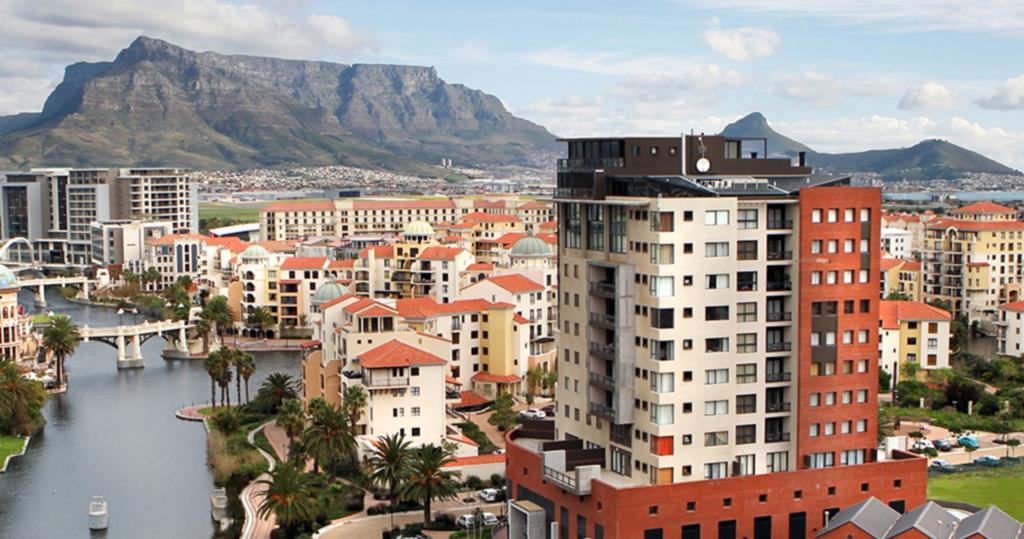
CAPE TOWN – Coal will still be part of South Africa’s energy mix of the future, although it will not enjoy the same dominance it is currently enjoying as an energy source.
This is according to Anthony Julies, deputy director general at the National Treasury.

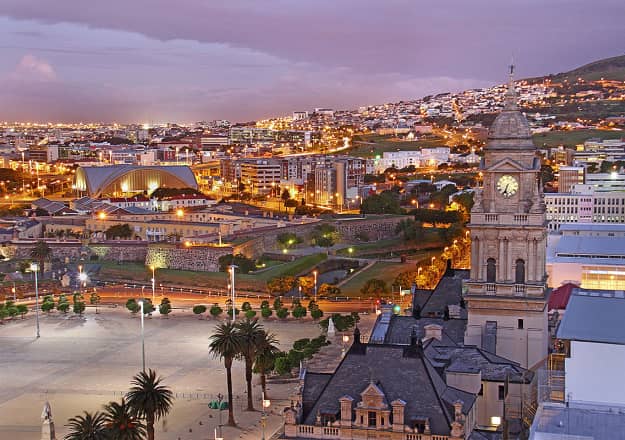
Julies was part of a panel discussion on Vision 2030: The IRP (Integrated Resource Plan) 2018 and infrastructure – Connecting Gas and Renewable Energy, at the Energy Week 2018 summit held in Cape Town this week.

Julies said that having an energy mix in the Treasury was important and already the White Paper for 2012 – 2025 identifies various energy sources.

“We anticipated that we would have gone to the level of 30percent renewable and private participation and as far as we are concerned as the Treasury, all of these energy sources should be prioritised because it is that energy mix of the future that is inevitable,” said Julies.

The session was moderated by Andrew Herscowitz, a co-ordinator for Power Africa, US Agency for International Development.

When asked by Herscowitz to identify what that energy mix is, Julies said this would include coal, nuclear, all kinds of renewables such as solar, wind and gas.

“That is the way of the future, because coal is not and will not have in future the dominance as an energy source it has always had. Yes, it has played a particular role and Eskom has played a particular role in that context, and so Eskom in the future will not be the Eskom of the past.

“There will be a diminishing role for coal and there will be an increasing role for gas and others in the future,” said Julies.

Julies said the Treasury had guaranteed R200billion for renewable energy.

“That is what we have on our books right now and so we really ought to have had a much higher take on it right now. One could argue in a way that on the extent that we were able to deliver on the Independent Power Producer Programme has in fact led to some avoidance of load shedding,” said Julies.

Source:https://www.iol.co.za/business-report/energy/coal-will-remain-energy-source-for-still-some-time-18492641

The cars you can afford to buy with your salary in South Africa

Research and data group Lightstone has compiled a list of cars that you can afford on your current salary – showing how much more you’d need to earn per month to keep affording them.

The latest data from the National Association of Automobile Manufacturers of South Africa (Naamsa) light commercial vehicle sales saw a decline of 6.1% year-on-year in November 2018, while the passenger car sector experienced a 5.4% drop.

The medium and heavy commercial vehicle market, meanwhile, saw a 17.5% and 16.2% increase, respectively.

According to vehicle financing group WesBank, the drop in domestic sales could be attributed to the latest interest rate hike, which pushed lending rates up by 25 basis points – however, despite the hike and the pressures on South African consumers, the car market “remains robust”.

Wesbank said its data showed that South Africans are still keen to buy cars – though a lot of the focus has shifted to the used car market. This, the group said, is indicative of stress in the new car market amid the pressures on household disposable income.

The group’s data also showed that motorists are holding onto their cars for longer.

Naamsa, meanwhile, said that it expects the car market to remain under pressure over the medium term, anticipating only a modest recovery.

Lightstone’s data, looking at the salary changes between 2017 and 2018 needed to afford the same vehicle shows what pressure consumers have come under.

In 2017, someone who earned R18,400 a month could afford to buy a new Toyota Etios 1.5 Xi – by 2018, the salary requirement had increased by almost 9% to R20,000 a month for the same vehicle.

The data is based on current South African vehicle prices and salaries (May 2018), and assumes that people are not going to spend more than 20% of their gross monthly income on financing a car. The calculations also assumes that the cars are financed over five years at an interest rate of prime + 2%.

This trend is seen across almost all the salary bands covered by Lightstone, with only five bands coming under CPI (5.2%).

With the car price in the top band (Maserati GranCabrio) not increasing between 2017 and 2018, the required salary actually decreased.

Source:https://businesstech.co.za/news/finance/289076/the-cars-you-can-afford-to-buy-with-your-salary-in-south-africa/

CFO granted bail of C$7.5m

INTERNATIONAL – Huawei Technologies chief financial officer Meng Wanzhou was granted bail by a Canadian court, allowing the executive to stay in her Vancouver home as she awaits a possible extradition to the US over fraud charges.

Justice William Ehrcke of the British Columbia Supreme Court agreed to release Meng on condition she post bail of C$10 million (R107.06m), including at least C$7m in cash, and submit five people who would act as “sureties” – guarantors to ensure she complies with the bail terms who would lose the cash or other assets they put up if she were to flee.

Meng broke into tears and wiped her eyes upon the announcement from the judge. The viewing gallery applauded. Meng, 46, was arrested on December 1 at the request of US authorities as she changed planes in Vancouver while on her way from Hong Kong to Mexico to Costa Rica to Argentina to France and back to China. Before the ruling, she seemed almost relieved at the prospect of a break from the punishing pace.

The mother of four is accused of conspiring to defraud banks to unwittingly clear transactions linked to Iran, in violation of US sanctions.

Source:https://www.iol.co.za/business-report/international/cfo-granted-bail-of-c75m-18492696

New Payment System to Dodge Iran Sanctions

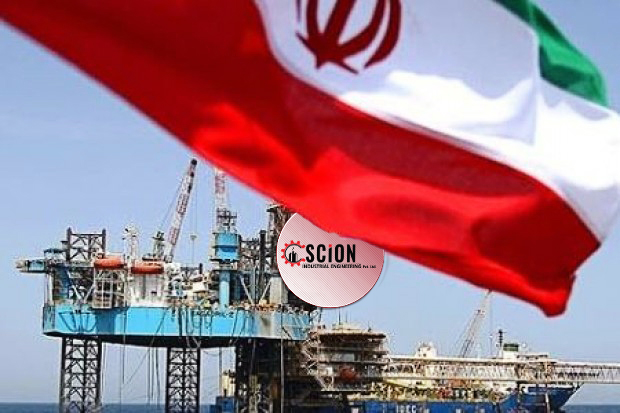
The remaining members of the Joint Comprehensive Plan of Action (JCPOA) have said they will set up a new payment system to maintain business with Iran and bypass US sanctions.

The system, the details of which are still to be determined, would allow businesses to continue trading with Iran without using dollars.

The full text of the Joint Ministerial Statement follows:

1. A Ministerial Meeting of the E3/EU+2 (China, France, Germany, the Russian Federation and the United Kingdom, with the High Representative of the European Union for Foreign Affairs and Security Policy) and the Islamic Republic of Iran, the participants of the Joint Comprehensive Plan of Action, was held on 24 September 2018 in New York.

The participants considered ways forward to ensure the full and effective implementation of the JCPOA in all its aspects. They also took stock of the process of finding and operationalising practical solutions for issues arising from the unilateral withdrawal of the United States from the agreement and the re-imposition of sanctions lifted under the JCPOA and its Annex II, which they deeply regret.

2.​​​The meeting was chaired by the EU High Representative Federica Mogherini and was attended by the E3+2 and Iran at the level of foreign ministers.

3.​​The JCPOA participants reconfirmed their commitment to its full and effective implementation in good faith and in a constructive atmosphere. They recalled that the JCPOA is a key element of the global non-proliferation architecture and a significant achievement of multilateral diplomacy endorsed unanimously by the UN Security Council through Resolution 2231.

4. ​The participants recognised that Iran has continued to fully and effectively implement its nuclear-related commitments, as confirmed by twelve consecutive reports by the International Atomic Energy Agency, and reiterated the need to continue to do so. Participants will continue to support the modernisation of the Arak research reactor as part of the JCPOA and the conversion of the Fordow facility in a nuclear, physics and technology centre. Participants also reaffirmed their support for projects in the area of civil nuclear co-operation on the basis of Annex III of the JCPOA.

5.​​The participants recognised that, alongside implementation by Iran of its nuclear-related commitments, the lifting of sanctions, including the economic dividends arising from it, constitutes an essential part of the JCPOA.

6. ​Participants underlined their determination to protect the freedom of their economic operators to pursue legitimate business with Iran, in full accordance with UN Security Council Resolution 2231.

7. ​The participants equally highlighted the extensive work and substantial progress undertaken to date, the intensification of technical dialogues, efforts to maintain and improve bilateral economic relations, and the mobilisation of considerable resources by all, including with third countries interested in supporting the JCPOA and in pursuing, in a timely and effective manner, the normalisation of trade and economic relations with Iran.

8. ​In this context, the participants welcomed the fact that updates to the EU’s “Blocking Statute” and the European Investment Bank’s external lending mandate to make Iran eligible entered into force on 7 August.

9. ​The participants re-affirmed their continued commitment to the objectives mentioned in the statement of the Ministerial Session of the Joint Commission of the JCPOA on 6 July 2018, in particular to pursue concrete and effective measures to secure payment channels with Iran, and the continuation of Iran’s export of oil and gas condensate, petroleum products and petrochemicals.

10. ​​Mindful of the urgency and the need for tangible results, the participants welcomed practical proposals to maintain and develop payment channels, notably the initiative to establish a Special Purpose Vehicle, to facilitate payments related to Iran’s exports (including oil) and imports, which will assist and reassure economic operators pursuing legitimate business with Iran. The participants reaffirmed their strong will to support further work aimed at the operationalisation of such a Special Purpose Vehicle as well as continued engagement with regional and international partners.

11. ​The participants stressed their determination to support practical solutions concerning the above and agreed to keep progress under close review and to convene the Joint Commission, including at Ministerial level, as appropriate in order to advance common efforts.

12. ​​The participants recalled that these initiatives are aimed at preserving the JCPOA which is in the international interest.
Volvo Halts Iran Truck Assembly under US Pressure

Scion Industrial Engineering

Swedish truckmaker AB Volvo has stopped assembling trucks in Iran because US sanctions are preventing it from being paid, a spokesman for the company said on Monday.

Volvo spokesman Fredrik Ivarsson said the trucks group could no longer get paid for any parts it shipped and had therefore decided not to operate in Iran.

“With all these sanctions and everything that the United States put (in place) … the bank system doesn’t work in Iran. We can’t get paid … So for now we don’t have any business (in Iran),” Ivarsson told Reuters by telephone.

The sanctions against Iran, reimposed on Aug. 6 by US President Donald Trump after his decision to pull out of the 2015 Iran nuclear deal, have forced companies across Europe to reconsider their investments there.

Before the sanctions were reimposed, Volvo had expressed an ambition for Iran to become its main export hub for the Persian Gulf region and North Africa markets.

The European Union has implemented a law to shield its companies, but the sanctions have deterred banks from doing business with Iranian firms as Washington can cut any that facilitate such transactions off from the US financial system.

Volvo was working with Saipa Diesel, part of Iran’s second-largest automaker SAIPA, which was assembling the Swedish firm’s heavy-duty trucks from kits shipped to Iran.

The head of Volvo Trucks was reported to have told Iranian media that he expected 5,000 Volvo trucks to be assembled locally in the year to March 2019 and that Saipa Diesel would begin to produce three Volvo truck models domestically.

Ivarsson did not know how much of this target had been delivered on. However, he said Volvo had no active orders in Iran as of Monday.

Source:http://www.iran-bn.com/2018/09/27/volvo-halts-iran-truck-assembly-under-us-pressure/

Iraqi Dinar may replace US Dollar in Iran-Iraq Trade

Iranian ambassador to Baghdad said Iran and Iraq are weighing plans to eliminate US dollar in trade transactions and also lift visa requirements for citizens of the two countries.

Speaking at a TV program on Saturday night, Iraj Masjedi said Tehran and Baghdad are considering plans to use Iraqi dinar for trade transactions or develop barter trade considering the banking problems caused by the US sanctions on Iran.

He also voiced Iran’s willingness to remove visa restrictions for travels between the two countries, saying the idea of lifting visa requirements for merchants and business people was discussed during Iraqi President Barham Salih’s Saturday visit to Tehran.

Masjedi highlighted the ample opportunities available for the Iranian business sector available in the Iraqi market, saying the Baghdad government welcomes foreign investments.

“The government of Iraq is seeking foreign investment in the economic field, and has now offered 1,200 projects worth $100 billion,” the ambassador added.

He assured Iranian investors of improving security in Iraq, saying the security conditions in the Arab country’s inland and border regions have been getting better since the defeat of the Daesh (ISIL) terrorist group.

The Iraqi president visited Tehran on Saturday with a ranking delegation for a series of political and economic talks.

After high-profile talks between the Iranian and Iraqi delegations, Iranian President Hassan Rouhani said the two neighbors can increase their annual trade from the current $12 billion to $20 billion.

Rouhani also noted that the two sides discussed ways for cooperation in the energy, power and oil industry, including the extraction of petroleum, and a plan to connect the two countries’ railroad networks.

Source:http://www.iran-bn.com/2018/11/19/iraqi-dinar-may-replace-us-dollar-in-iran-iraq-trade/

Iraq Emerges as Iran’s Top Export Destination

Scion Industrial engineering

Iraq has emerged as Iran’s top export destination in the current Iranian year, an official announced.

The director of the export bureau of Iran’s Customs Office, Ali Akbar Shadmani, said the value of the country’s exports since the beginning of the current Iranian year (March 21, 2018) has surpassed $30 billion, with Iraq being the top export destination.

He said the value of exports has risen by 12.5 percent compared to the corresponding period last year.

Iraq has imported 21 percent of the Iranian commodities this year in terms of value, worth $6.607 billion, he noted.

The main goods exported to Iraq include natural gas, steel bars, oils and bitumen, home appliances, and agricultural products, the official added.

President of Iraq Barham Salih visited Tehran on Saturday with a ranking delegation for a series of political and economic talks.

After high-profile talks between the Iranian and Iraqi delegations, Iranian President Hassan Rouhani said the two neighbors can increase their annual trade from the current $12 billion to $20 billion.

Rouhani also noted that the two sides discussed ways for cooperation in the energy, power and oil industry, including the extraction of petroleum, and a plan to connect the two countries’ railroad networks.

Source:http://www.iran-bn.com/2018/11/19/iraq-emerges-as-irans-top-export-destination/

How small businesses can guard against cyber threats

scion industrial engineering

The more interconnected the world becomes, the greater the risk posed by weaknesses in devices or networks.

According to Simon Bryden, consulting system engineer of cyber security firm Fortinet, it’s not just preventing breaches that’s important for businesses – it’s knowing what to do once there is a breach, which most businesses overlook.

Bryden spoke to Fin24 about the importance of adequate cyber security at the company’s international media conference held last week in Sophia Antipolis, France.

Fin24: Do consumers and small businesses understand the extent of security threats? How can they be made more aware?

Simon Bryden: For the most part, our customers understand risk. Most know there are risks and that they need to invest in security.

There is a big drive towards security management, especially in enterprises. These enterprises need a security partner who understands risk, and can best advise them and provide them with the level of protection they need. It is more tricky if enterprises do it themselves.

For example, enterprises need to quantify the risks and understand how to allocate their budgets to address them. This is where a security management partner can help.

Are there some basic pitfalls that small businesses often overlook when it comes to security?

There are some pitfalls. For example, they rely on boundary protection – where they protect everything from the outside.

But apart from these barriers, they need to ensure that if a cyber attacker gains access to the network, it’s not an “open bar” for attackers to cause more damage. They need more barriers within their networks.

Put in place solutions – assume that you will be breached, and when you do get breached, you need to make sure that you are made aware of it as soon as possible to take further action.

What’s the best starting point for a small business with limited resources to protect themselves?

Small businesses without the necessary in-house skills need to find a managing security partner – that’s the most efficient way of getting protection.

Secondly, they should make sure their staff are trained. This may even be more cost-effective than getting a managing security partner.

What’s the best way to approach innovation, while maintaining security measures?

When we use artificial intelligence to improve products, there’s a risk that attackers can use innovation to get a foothold in networks.

It’s a double-edged sword – we can’t stop attacks from happening, but we can be proactive and predict potential vulnerabilities. That way we can help consumers better understand the need to have protection.

What’s the most important thing organisations should focus on when to comes to managing cyber threats?

Train staff to make sure they are aware of potential security threats.

And work with partners to figure out the best solutions for the risks to the organisation. It’s important to understand the risks to the organisation, and understand the best security approach to manage these risks – especially for small and medium sized businesses without inhouse skills.

They can’t turn away from the problem. They need to face it and find partners to help out, and put the best solution in place.

source:https://www.fin24.com/Entrepreneurs/qa-how-small-businesses-can-guard-against-cyber-threats-20181124

Asian dealers trade carefully before Trump-Xi, oil extends gains

Scion Industrial Engineering

Hong Kong – Asian markets were mixed on Friday with dealers moving cautiously at the end of a broadly upbeat week with focus turning to the much-anticipated meeting between Donald Trump and Xi Jinping.

Energy firms were among the best performers after a rally in oil prices, while high-yielding and emerging market currencies continued Thursday’s advances against the dollar as the Federal Reserve shows signs it will slow down its pace of interest rate hikes.

While the outcome of Saturday’s crunch talks between Trump and Xi hangs in the balance, there are hopes the heads of the world’s top two economies can find a way to ease their trade row that has seen them exchange deep import tariffs.

Ahead of the leaders’ arrival in Buenos Aires late on Thursday for the G20 meeting, there have been conflicting messages coming out of Washington about the chances of a breakthrough, with most observers saying they do not expect any major announcements.

“I wouldn’t be surprised at the end of this weekend if the US and China didn’t announce a concord that basically set down a path to help resolve the trade frictions,” Scott Minerd, chief investment officer at Guggenheim Partners, told Bloomberg TV.

“I don’t think that out of the meeting there’s going to come much substance, but there will be a sort of set of principles that will be established to start the process of bringing an end to the trade war.”

OPEC meeting up next

On Asian equity markets Hong Kong added 0.6 percent, while Shanghai gained 0.1%, with dealers there poring over data showing Chinese manufacturing stalled in November as the effects of Trump’s multi-billion-dollar tariffs begin to bite.

Singapore gained 0.3%, while Wellington and Taipei each rose 0.4%.

However, Tokyo reversed early gains to end the morning marginally lower, Sydney shed 1.3% and Seoul was off 0.4%.

Past the G20 meeting, traders are looking to the following weekend’s gathering of OPEC and non-OPEC oil producers, where Saudi Arabia and others are expected to cut output in a bid to support prices.

Crude edged up on Friday, a day after enjoying a much-needed rally on a report that Russia will join in the reduction, providing a boost to regional energy firms.

“If a meaningful deal is reached between OPEC and Russia to tackle glut problems, we can probably expect a meaningful rebound in energy prices,” said Margaret Yan Yang, market analyst with CMC Markets Singapore.

However, others pointed out that no one knows how much and for how long the output cuts will be, while at the same time the US continues to ramp up production.

Stephen Innes, head of Asia-Pacific trade at OANDA, added: “With traders already anticipating a one million barrels per day cut, which is arguably priced in, it will probably take a much deeper cut to jolt the market into a short covering rally.

“Otherwise, the market falls prey to the prevailing bearish sentiment that will continue to drive prices lower on the premise the reduction might not be sufficient enough to draw down surplus supplies.

source:https://www.fin24.com/Markets/International-Markets/asian-dealers-trade-carefully-before-trump-xi-oil-extends-gains-20181130

Stocks Decline Before G-20; Treasuries Edge Higher

Scion Industrial Engineering

US equity futures dropped with European stocks as investors count down to a meeting between the American and Chinese presidents that could decide the course of the trade war. Benchmark Treasury yields fell and the dollar gained.

Carmakers and banks led a retreat in the Stoxx Europe 600 Index, while futures for all three major US indexes slid amid lingering doubts over the prospects for a thaw in relations between Presidents Donald Trump and Xi Jinping. Shares gained in Tokyo, slipped in Seoul and fell in Sydney, with Shanghai and Hong Kong stocks rising even after data showed that China’s economy remains in a weak patch. WTI crude dropped below $51 a barrel, on track for the biggest monthly slump in a decade. The euro weakened after data showed inflation in the common-currency region easing.

Trump, who is meeting Xi over dinner on Saturday, said on Thursday he’s very close to “doing something” with China as officials work on the contours of a deal that may delay ramping up tariffs on the Asian country in January. Any sign of a trade truce could take the edge off a rampant greenback and boost risk assets including emerging-market currencies and stocks. Goldman Sachs, however, said an escalation of tensions is the most likely outcome.

“I wouldn’t be surprised at the end of this weekend if the US and China didn’t announce a concord that basically sat down a path to help resolve the trade frictions,” Scott Minerd, chief investment officer at Guggenheim Partners, told Bloomberg TV in Tokyo. “I don’t think that out of the meeting there’s going to come much substance, but there will be a sort of set of principles that will be established to start the process of bringing an end to the trade war.” His firm manages about $265bn.

The best-case scenario: what the Trump-Xi dinner could yield

The first official gauge of China’s economy in November showed manufacturing activity continued to worsen, indicating the authorities will need to keep using stimulus measures as economic growth slows. On Thursday in the US, minutes from the Federal Reserve’s last policy meeting showed the central bank preparing for a more flexible path in 2019.

Elsewhere, Korea’s won held on to this week’s losses as Friday’s interest rate increase did little to assuage concern surrounding the economy. The pound remained under pressure, drifting downward as UK Prime Minister Theresa May continued efforts to win backers for her Brexit deal. Emerging-market equities and currencies dipped.

Coming Up

Trump and Chinese President Xi Jinping will meet at the G-20 summit of world leaders in Argentina that kicks off on Friday. Russia’s Vladimir Putin and Saudi Arabia’s Mohammed bin Salman are likely to discuss oil policy. Ford, Fiat Chrysler, other automakers report November US sales on Monday. New York Fed President John Williams speaks at an event on Friday. Fed Chairman Jerome Powell testifies on the economic outlook before Congress’s Joint Economic Committee next Wednesday.

These are the main moves in markets:

Stocks
The Stoxx Europe 600 Index sank 0.5% as of 07:02 New York time. Futures on the S&P 500 Index dipped 0.5%, the first retreat in a week. The MSCI All-Country World Index declined 0.2%. The MSCI Emerging Market Index fell 0.3%.

Currencies
The Bloomberg Dollar Spot Index advanced 0.2%, the largest gain in a week. The euro decreased 0.2% to $1.1368. The British pound dipped 0.3% to $1.2755. The Japanese yen declined less than 0.05% to 113.49/$.

Bonds
The yield on 10-year Treasuries decreased two basis points to 3.01%, the lowest in more than 10 weeks. Germany’s 10-year yield fell one basis point to 0.31%. Britain’s 10-year yield fell two basis points to 1.344%, the lowest in more than three months. Japan’s 10-year yield jumped one basis point to 0.092%.

Commodities
West Texas Intermediate crude decreased 1.8% to $50.53 a barrel. Gold declined 0.1% to $1 222.41 an ounce. Copper fell 0.4% to $2.78 a pound.

Source:https://www.fin24.com/Markets/International-Markets/stocks-decline-before-g-20-treasuries-edge-higher-20181130