The biggest responsible investing myth debunked

scion industrial engineering

By Jon Duncan, Head of Responsible Investment, Old Mutual Investment Group

Contrary to popular belief, investors are not giving up upside performance when prioritising companies with a better environmental, social and governance (ESG) record.

Responsible Investing is rooted in an understanding that how we invest today determines the quality of our future. Simply put, if we continue to invest in unsustainable companies that erode public trust, pollute the environment and drive inequality, we should accept that this is the kind of future we will bestow on our children.

Responsible Investing continues to gain attention from the investment community because companies with better Environment, Social and Governance (ESG) practises can, and do, drive better investment performance. At its heart, this latter dimension is a focus on the understanding that sustainability is a macro thematic trend that is fundamentally reshaping the competitive landscape across all sectors. Research from Harvard Business School in 2014 evidences that companies with good sustainability practises, versus their industry peers with poor sustainability practises, produce both market and accounting based outperformance. The core myth associated with Responsible Investment is that companies that focus on ESG issues reduce returns on capital and long-run shareholder value. The reality as evidenced by both academic and industry research is to the contrary: companies committed to sound ESG practises show specific measurable attributes such as lower cost of capital, better resource efficiency, stronger innovation, lower staff turn, stronger social licence to operate and better access to markets. All attributes that can and do influence competitive advantage and longer-term performance.

RESPONSIBLE INVESTING IN LISTED EQUITIES

Both the “ethical” and the “maximising risk-adjusted returns” dimensions of responsible investing have resonated with the retail investing community. In line with global trends, there is a growing number of local retail investors, as well as financial advisors, who are realising that the outperformance of companies with higher ESG scores speaks for itself.

There are three broad approaches in the listed equity environment for a domestic retail investor to consider:

1. Traditional equity products that incorporate ESG issues.

This means the fund manager makes a commitment to factor in and integrate ESG issues in their investment strategies. This includes taking their role as custodians of clients’ capital seriously by engaging with investee companies through a ‘Responsible Investment’ lens and ensuring their proxy voting aligns with the commitment to a sustainable approach to investment. The fund manager should also be able to indicate how they have considered and championed ESG issues in their investment process through transparent communication, i.e. reporting. This approach should be a minimum consideration for all investments and investors can apply this equally to local and international investment funds, assessed through fund fact sheets.

2. Thematic-styled equity products that build portfolios of companies that are part of the sustainable economy (i.e. low-carbon, resource efficient and socially inclusive).

Funds using this approach can be single-themed funds focused on renewable energy, sustainable mobility or water. They can also cover a broad range of themes across the ‘green economy’ with specific exclusions around key issues, for example coal or tobacco. This approach is currently difficult to apply in the local market as there are not many listed companies with revenue directly linked to core sustainability growth themes. It can however be successfully applied at an emerging or developed market level, and there are several investment firms that offer compelling products in this category. This is a viable option for investors who believe in the long-term growth theme of a sustainable economy.

3. Index or active quant funds that systematically capitalise on ESG data asymmetry.

This approach relies on the growing body of company level ESG data that is available through a range of service providers, for example the MSCI. This ESG data is leveraged to create ESG indices (indices that give exposure to companies with a strong ESG stance) or used in innovative active quant investment strategies. There are already several ESG index products available both locally and globally that can offer retail investors market-like returns by holding a basket of companies that are measurably better when considered on an ESG basis. Coupled with low costs, these passive investment products can offer investors an attractive starting point.

For domestic equity investors that have an interest in Responsible Investing, two viable options exist – either select a traditional fund that has integrated ESG into its investment and ownership decisions or look into ESG-led index-tracking products.

Not covered in this article are approaches that involve negative screening based on ethical or faith based values. Such approaches can be employed, but may conflict with maximizing risk adjusted returns (which is of course a perfectly reasonable outcome if values alignment is the primary goal).

Source:https://www.fin24.com/Thought-leadership/Old-Mutual/the-biggest-responsible-investing-myth-debunked-20181102
South Africans can’t keep bailing out a broken airline

scion industrial engineering

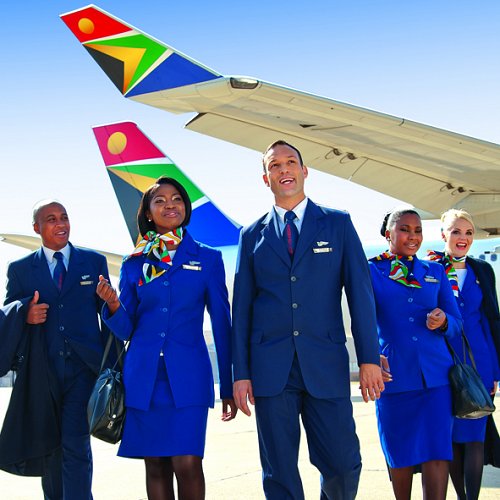
R21 bn: that’s how much South Africa’s beleaguered national carrier, South African Airways (SAA), says it needs to keep running.

SAA has reached this point in its financial crisis through persistent mismanagement and cronyism, with the SA government as main shareholder refusing to take tough decisions about the company. But such decisions can’t be delayed any longer.

In theory, it’s the South African government that supports SAA and bails it out in times of need. But in practice, it’s the country’s already struggling taxpayers who foot the bill. And they keep doing so, with no clear plan in sight to stem the airline’s financial haemorrhaging. The Free Market Foundation, an economic and policy think tank, estimates that SAA has already cost taxpayers close to R60 bn in the past 20 years.

President Cyril Ramaphosa says that closing SAA would destabilise other state-owned entities and the broader economy.

The country’s recently appointed finance minister Tito Mboweni disagrees. In his recent medium-term budget policy statement, Mboweni warned that failing state-owned entities are “no holy cows” and would be expected to pull their financial weight.

South Africa can’t afford any more delays. Strong players in the continent are eating into the airline’s already weakened base. These include Ethiopia and Kenya’s national carriers as well as minnows like Namibia’s airline.

In the meantime, South Africans taxpayers are caught between a rock and a hard place. The country can’t afford SAA anymore – and can’t afford to close it down. What is the next step, then?

The only option left for SAA

I believe there is only one option: an independent cost-benefit analysis into SAA’s continued existence and the possible implications of its sale or closure. This should be an independent process; both SAA and the South African government have vested interests in the outcome.

This would be a first, and its successful completion could set a benchmark for judging the continued financial viability of other problematic state-owned entities like Denel and the South African Broadcasting Corporation.

I have argued for some time that SAA is nothing more than a government vanity project and should be sold. In March 2016, when I first said this, it might have been feasible; then, the airline was still financially viable. That moment has passed as the government kept SAA as a vanity project.

This is urgent. SAA is not just asking for more money to keep itself airborne. Its chief executive, Vuyani Jarana, has told a parliamentary committee that the airline will not be profitable by 2020, as it initially announced. It now says it will be profitable by 2021.

One of the reasons it has fallen short is that SAA’s management got its oil price forecasts completely wrong. It planned for an average oil price of US$ 45 per barrel over. The actual average has turned out to be US$ 75 per barrel.

It does not take a lot of management competence to understand that a single oil price cannot be used in profitability forecasts for a company sensitive to oil price fluctuations, as is the case with an airline.

It has also emerged that senior managers at SAA are earning enormous monthly salaries (Jarana, for instance, earns R6.7 million a year). This fact, coupled with obviously chronic financial mismanagement – how else to explain that the airline spent its last government bailout of R5 billion in just one month? – is galling to taxpayers.

During its presentation to Parliament, SAA’s managers offered no alternative plans. It’s a government bailout – or bust. But this isn’t sustainable. An independent assessment is critical if SAA is to be saved from itself; and the country’s reeling taxpayers are to be saved from the airline’s excessive demands.

Source:https://www.fin24.com/Opinion/south-africans-cant-keep-bailing-out-a-broken-airline-20181130

Mottama completes structure of Myanmar’s first high-rise steel building

scion industrial engineering

YANGON — Mottama Holdings said on Tuesday it has completed the structure of Myanmar’s first high-rise steel building, a US$80 million office tower in Yangon called M Tower that the company is building through a joint venture with a Hong Kong investor.

The 26-storey project on Yangon’s Pyay Road is being built by Mottama subsidiary Min Dhama Steel Structure using locally manufactured steel structure and is expected to be finished by 2020, after which 300,000 square feet will be leased as office space. The 0.97 acre site is owned by Mottama chairman U Yang Ho, company director U Tin Maung Htun told Frontier on Tuesday.

He said the investor, M Tower Company, is a joint venture between Mottama, which holds a 51 percent share and a Hong Kong-based company, which holds 49 percent, and that the project is funded through company revenues and shareholder loans.

M Tower was originally known as AMC Tower before Mottama changed its name from Asia Metal Company in 2013 after it was sanctioned by the United States Treasury Department for building work at a Tatmadaw factory at which US officials said about 30 North Koreans were working. The sanctions were lifted in October 2016 when the Burma sanctions program was terminated.

The group was founded in 1997 as a steel materials trading and services company, before its expansion into construction, manufacturing, trading, hospitality, property development and logistics. With 23 subsidiaries, and regional offices in Singapore and Hong Kong, the group has built over 50 infrastructure projects, 40 commercial buildings and 40 “national projects” it said in a statement Tuesday.

In 2016 Mottama was a founding member of Grand Yangon Public Company, a 12-member consortium that Tin Maung Htun said intends to build infrastructure across the Yangon Region. He said the company has completed a pre-feasibility study for a Yangon outer circular expressway.

Documents seen by Frontier show the $2.18 billion project would be built with Shandong Hi-Speed Qingdao Development Company. Tin Maung Htun said the company was working with a Chinese investor that was partly state-owned.

“We have completed a pre-feasibility study [for the road] which the Myanmar Investment Commission has approved,” he said. “Now the Ministry of Construction is taking care of the process and sooner or later they will call an EOI [expression of interest] to find a consultant and funding.”

The group is involved in another major infrastructure project in Yangon: in February, its subsidiary Min Dhama was selected as a preferred bidder for the Yangon Central Railway Station redevelopment, which has an estimated $2.5 billion price tag.

The consortium, comprising Min Dhama, Singapore’s Oxley Holdings and Shenzhen-listed Sino Great Wall, was selected ahead of a consortium comprising Singapore-listed Yoma Strategic Holdings and Myanmar-listed First Myanmar Investment, both companies connected to businessman Mr Serge Pun.

The long-delayed tender for the 63-acre site in the heart of downtown Yangon was first announced in 2014.

Tin Maung Htun said the group was now preparing a draft concession agreement with Myanma Railways, under the Ministry of Transport and Communications, which owns the 25.7 hectares, or 63.5 acre project site in downtown Yangon.

Once a draft concession agreement has been signed, it will be submitted for review to the Union government, including the Attorney General’s Office. Tin Maung Htun said the project will also require Myanmar Investment Commission approval. “Because this is a national size project there are a lot of stakeholders involved, maybe six to 10 different authorities … there are so many steps,” he said.

https://frontiermyanmar.net/en/mottama-completes-structure-of-myanmars-first-high-rise-steel-building

Chinese low-cost airline launches flights from Yangon to Guangzhou

scion Industrial Engineering

YANGON — Chinese low-cost airline 9 Air on Sunday launched direct flights between Yangon and Guangzhou in southern China, less than a month after the carrier launched its first international flight, to Mandalay, on October 2.

9 Air, central and southern China’s first low-cost carrier, began operations in 2014 from its base in Guangzhou, the capital of Guangdong province. A subsidiary of Juneyao Airlines, it now operates over 40 domestic routes with a fleet of 16 Boeing 737-800 planes.

The airline has regional expansion plans: by 2025 it aims to operate 80 aircraft with services to destinations including Kalibo in the Philippines, Bangkok in Thailand, Da Nang in Vietnam and “popular cities in Japan” according to a statement by Yangon Aerodrome Company, the operator of Yangon International Airport.

The statement said flights from Guangzhou to Yangon would run four times each week, with low-fare options starting at less than US$100. “This new route will substantially meet the needs of business travelers, family visits and general tourism,” it said.

9 Air will compete on this route against China Southern Airlines and Myanmar Airways International, which is 80 percent owned by Kanbawza Group and is the only private airline in Myanmar to operate international flights.

There were 452 flights last year between Guangzhou and Yangon, which transported some 40,000 people, according to Ministry of Hotels and Tourism data, with an average seat occupancy rate of 63 percent.

The number of Chinese visitors to Myanmar has increased exponentially over the past five years, from 70,805 in 2012, to 212,642 in 2017, ministry data shows, accounting last year for some 15 percent of total international visitors.

Source:https://frontiermyanmar.net/en/chinese-low-cost-airline-launches-flights-from-yangon-to-guangzhou

Good time to book, switch to new retail premises: Colliers

It’s now a good time for retailers in Yangon to keep a look out for better premises from which to do business, given that rental rates are still manageable and ahead of anticipated demand, according to recent intelligence from property research firm Colliers.

With several new and modern shopping malls scheduled to come onstream and backed by a spike in the number of young people plying these developments, rental rates are expected to gradually increase in the coming quarters. As such, now is the time for retailers to book a good location to open shop so that they are better positioned to ride the emerging trend.

“The introduction of more quality malls means that rents may further trend upwards in the succeeding years. The continuous entry of foreign brands, particularly food and beverage chains, is likely to reinforce uphill pressure on rents,” Colliers analyst Paul Ryan Cuevas wrote in a November 6 report.

Before the end of the year, new retail space at Kantharyar Shopping Mall by Asia Myanmar Shining Star Investment Co Ltd, The Central Boulevard by Marga Landmark Development Co Ltd and Space @ Yankin by Crown Roofing Co Ltd – all situated within Yangon – are expected to become available.

Next year, additional space at Central Boulevard, Fortune Plaza by Excellent Fortune Development Group and Yadanar Mall by Crown Advanced Construction Co totalling more than 150,000 sq metres will come onstream.

However, aside from Inno City by Inno Co Ltd, Yoma Central by Yoma Strategic Holdings and The Garden by Kajima Corporation, which are some of the sizeable shopping malls set to debutbetween 2020 and 2021, additional supply of retail space scheduled for those years is limited.

Rental rates

Against that backdrop, Colliers is advising retailers to take advantage of the current opportunity, when choice is still available and rental rates are still low, to move into more modern and better quality premises as competition is expected to intensify in the coming years.

Already, there’s been a recent spike in interest in modern developments such as Junction City, St. John City Mall and Myanmar Plaza.

Currently, the average rental rate is around US$33 per sq m per month, which is an increase of 3 percent from the same period last year. “The introduction of more quality malls means that rents may further trend upwards in the succeeding years” according to Mr Cuevas.

He added that the continuous entry of foreign brands, particularly F&B chains, is likely to reinforce uphill pressure on rents. This year, for example, foreign brands such as Aunty Anne’s, Krispy Kreme and Coffee Bean and Tea Leaf have already entered Myanmar with grand plans to roll out more outlets.

Curated offerings

For developers, Colliers advise is to focus on more lifestyle-oriented hubs, regional shopping centres and destination malls. “In the meantime, we advise developers to push for a well-curated tenancy mix. Adding more distinctive tenants such as food halls, amusement parks, movie theaters, arcades, bowling alleys, event gathering spaces and fitness centers to shopping malls is a direct response within the industry to accommodate changing shopping behaviours and new preferences,” Mr Cuevas wrote.

These days, consumers, particularly teenagers and young adults, which represent close to half the Myanmar population, are showing heightened focus on experience, personalisation, and social engagement, which must be considered when developing new projects to increase foot traffic and value.

“Adopting these initiatives will drive value enhancement as well as help leverage over competition going forward,” Mr Cuevas wrote in his report.

https://www.mmtimes.com/news/good-time-book-switch-new-retail-premises-colliers.html

Myanmar’s first dry port opens for business

Scion Industrial Engineering

KM Terminal & Logistics Ltd (KM) and Resource Group (RG) officially opened two separate dry port projects in Ywar Thar Gyi, Yangon yesterday.

A dry port is an inland intermodal terminal directly connected by road or rail.

Freight trains will run from Ywar Thargyi to a second dry port in Myit Nge, Mandalay, which KM will also own and operate. The company said it invested over US$50 million (K78 billion) in both ports.

KM is joint venture company that is 70 percent owned by Kerry Logistics and 30pc owned by Mother Logistics, its local partner.

Meanwhile, Myanmar-owned RG has invested US$40 million in a similar project under which freight trains will run from its Ywar Thar Gyi dry port in Yangon to its Myit Nge dry port in Mandalay, according to RG.

The two projects are expected to help improve Myanmar’s logistics network. “Because our logistics system is not good, costs are high across the transport value chain. As such, Myanmar needs logistics hubs like these dry ports to help upgrade the system,” U Thant Sin Maung, Union Minster of Transport and Communication, said at the opening ceremony of KM’s dry port.

The Yangon dry ports will handle cargo directly transferred from the Yangon river ports and Thilawa ports and help to alleviate traffic congestion on the roads. It will also speed up the flow of cargo between vessels and major land transportation networks, which adds value for consignees and exporters.

In addition, the Ywar Thar Gyi dry port in Yangon and Myit Nge dry port in Mandalay are strategically located in the centre of Myanmar, which will support trade between lower and upper Myanmar.

“Our Yangon dry port will now be linked by road and railway to our Mandalay Myit Nge dry port, which started operations since May,” said U Nyi Htut, general manager of KM.

U Myint Maw, managing director of RG, said the ports will help to streamline trade flows and decrease logistics costs.

Last year, Myanma Railways, which is under the remit of the Ministry of Transport and Communications, signed agreements with KM and RG to construct the dry ports under a build, operate and transfer system.

Myanmar ranks 137 out of 160 countries on the World Bank’s logistics performance index 2018.

Source: https://www.mmtimes.com/news/myanmars-first-dry-port-opens-business.html

Local cement companies thriving over multinationals

scion Industrial Engineering

Large government infrastructure projects and increased urbanization are boosting the local cement industries, as the sector has been growing more than 12.50% in the last five years, according to multiple studies and sector people.

Currently, more than 32 cement manufacturing companies, four of them multinationals, produce around 30 million tons of cement per annum.

Local companies hold more than 80% of market share, beating the multinationals by their attractive prices and quality.

Higher per capita incomes and sustained period of political stability helped grow the sector amid huge construction works in both public and private sectors, studies observed.

“Demand for cement has registered a robust the Compound Annual Growth Rate (CAGR) of 12.67% over the last five years. This is significantly higher than the country’s GDP growth, according to a recent study of LankaBangla Investment Ltd.

Average per capita cement consumption in the world is 500kg while that of Bangladesh is only 120kg, the study said referring to a World Bank.

According to another study of Lafarge Surma Cement, nearly 40% of total cement used in a single year is consumed in the construction of private homes followed by 33% in government buildings and infrastructure, 24% is used to build real estate and commercial buildings.

The remaining 3% cement is used for other purposes, said the study.

“A sustained period of political stability has provided stable and growth supportive environment,” said the report of LankaBangla Investment Ltd.

“Increased urbanization has been a key factor in the rise of the cement industry. Furthermore, higher per capita incomes have resulted in greater affordability while changing lifestyles have resulted in more nuclear families. These factors have contributed to consistent rise in the demand for construction materials such as cement.”

Large government infrastructure projects have sustained the growth in cement demand amid a slow real estate recovery, it further said.

People involved in the cement sector said large government infrastructure projects have shot the demand for construction materials, including cement.

In a recently surveyed report by the Cement Manufacturer’s Association, it has been found that there is production capacity of 40 million tons per annum, whereas actual production is hovering around 32million tons.

The machinery, equipment and manufacturing sites are not being utilized fully by the cement manufacturing companies. On an average the utilization rate by these companies is currently around 75-80%, the survey said.

The sector-related people say companies could not reap benefits of lower clinker prices due to the domestic price war. For the production of cement, two types of material are required — calcareous material such as limestone, chalk, etc., and the another is clay, which are extracted from quarries.

Limestone is the primary raw material for producing cement clinker. There are also other raw materials used in the cement industry.

Bangladesh depends on imports and it is one of the largest importers of clinkers globally. Of the 32 cement producers that are currently in operation, only two have clinker production facilities in their own plants. One is Chhatak Cement Factory Ltd, a government owned company, with limited production capacity and the other is LafargeHolcim Bangladesh Limited.

Out of seven listed companies in the premier bourse, six are listed in the ‘A’ category, meaning the companies regularly provide dividends to shareholders. The remaining one listed firm – Aramit Cement Limited fall under the ‘Z’ category.

The cement sector contributed 2% of the total turnover of the Dhaka Stock Exchange (DSE) in the last month, compared to 2.49% in September, 1.06% in August, and 1.41% in July, according to DSE data.

The listed Cement sector companies are Confidence Cement, Heidelberg Cement Bangladesh Ltd, LafargeHolcim Bangladesh, Meghna Cement Mills, M.I. Cement Factory (Crown Cement), Premier Cement Mills and Aramit Cement Limited.

Currently, only 32 factories are in operation, including four multinational companies. At present, 81% of the total market share is held by top 10 manufacturers. Among the top 10 cement market players in Bangladesh, eight are local and two are multinationals.

Multinational cement companies are facing intensive competition with local ones which are grabbing the top slot of the industry by operating along the economy of scale and with deft marketing strategies. Multinationals now hold only 25-30% of the total market share, industry sources said.

As a result of failure to penetrate the market, two of the global cement groups, UAE based Emirates Cement and Mexico based cement manufacturer Cemex have recently divested their Bangladesh operations. However, the acquisition of Holcim by Lafarge Surma will reshape the industry dominance in Bangladesh in the days to come as both companies already operate their own businesses in the domestic market, sector people said.

After the completion of acquisition, Lafarge Holcim has the 2nd place in terms of market share.

Another recent study by EBL securities revealed that Shah Cement holds 14% of the market share, while Lafarge Holcim holds 11.8%, Bashundhara Group 9.1%, Seven Rings Cement 8.1%, Heidelberg Cement 8%, Premier Cement 6.6%, M.I. Cement (Crown Cement) 6.6%, Fresh Cement 6.5%, Akij Cement 4.2%, and Confidence cement 2%, according to the study.

The sector-related people say Bangladesh is a populous country. On the other hand, the country’s economy continues to grow steadily. Therefore, construction of multi-storied buildings across the country is going on in full swing.

Urbanization in various cities including Dhaka is increasing. Construction of major infrastructure mega projects including the Padma Bridge, Metro Rail and Dhaka Elevated Expressway is boosting the demand.

Further, the use of cement in the villages is increasing more than urban areas, cement traders said.

“Foreign remittance has been playing a vital role that encourages rural people to construct buildings for their living,” a trader said.

Belal Hossen, executive director of the Bangladesh Cement Manufacturers Association (BCMA) told the Dhaka Tribune: “The cement sector is growing day by day as demands keep soaring. At the same time, foreign currency earning is also increasing through limited scale exports.”

Terming the industry mostly dependent on import for its raw materials, the association leaders urged the government to lower tariffs for further expansion of the sector.

Coastal belt holds wind power prospects: study

Scion Industrial ENgineering

Bangladesh’s southern coastal belt offers potential for generating power through wind, according to a recently published study by the US Department of Energy’s National Renewable Energy Laboratory, raising hopes of meeting the government’s renewable energy goals.

The government has targeted to generate 2,470 megawatts of electricity by 2021 through renewable sources, 1,153MW of which was supposed to have been achieved by this year. In reality, the government is nowhere near hitting that target.

The study, carried out on behalf of the power division, found that coastal areas of Khulna, Barishal and Chattogram divisions have more than 6 metres per second (m/s) wind speed at 120-metre height, sufficient for generating electricity from wind turbines.

For wind speeds of 5.75-7.75 m/s, there are more than 20,000 square kilometres of land with a gross wind potential of more than 30,000MW, said the report styled “Assessing the Wind Energy Potential in Bangladesh”.

“Although this estimate is not realistic when proper filters are applied to screen out undesirable land for wind development, it suggests that Bangladesh’s 10 percent renewable target by 2021 is achievable,” the report said.

Until now, only three wind turbines with 3MW of capacity have been in operation for the last couple of years in Feni and coastal Kutubdia.

The wind turbine in Feni, with the blades’ centrepoint 50 metres above the ground, has so far generated 588,334 kilowatt hours of electricity since resuming operations in April 2014 after repairs.

It cannot always supply the generated electricity to the national grid for various reasons.

The wind turbines in Kutubdia island, each of 1MW capacity and with the blades’ centrepoint 18 metres above the ground, are yet to run in full capacity.

Since June 2016, 149,582kW of electricity was supplied by the wind turbines, according to Bangladesh Power Development Board (BPDB), which installed the turbines.

The latest study, jointly funded by the USAID and the government, has been done to develop a national wind resource assessment.

Data were collected from nine meteorological sites representing all geographical regions of Bangladesh from June 2014 to December 2017, according to the report.

The results of the wind resource assessment will help Bangladesh overcome the significant energy challenges, the report said citing the country’s power shortage against the backdrop of increasing demand and dwindling natural gas reserves.

Data obtained for the study will support informed decision making, ranging from policy and investment decisions to reliable power sector planning.

Specifically, the Bangladesh wind resource assessment will help reduce technical risks and raise interest of the private sector on the nascent wind market in the country, it said.

On the issue of whether wind energy can compete with the local wholesale energy market, the report said, “Although this work is an important first step, other data inputs are needed to answer this question, including turbine selection and knowledge of the unsubsidised cost of wholesale power.”

The report, among others, recommended the government analyse installation and financing costs for wind energy and compare against the current 20-year forecasts for Bangladesh’s cost of power.

This is the first ever study on wind resource potential in Bangladesh, said an official of the Sustainable and Renewable Energy Development Authority (Sreda).

“It will give an idea to policymakers and investors,” he said, adding that an investor would require collecting site specific wind and land data if he/she wants to set up wind turbines in the potential areas for wind energy.

A working committee has been formed at Sreda to frame a guideline on wind energy. Sreda also has plans to take up a project to set up three towers to collect site specific data in areas including Kuakata of Patuakhali.

A committee has been formed to conduct in-house feasibility study on the wind energy potential in Mongla and Chandpur based on the report, said Md Nazmul Haque, director of renewable energy of the BPDB.

Source:https://www.thedailystar.net/business/wind-power-plant-prospects-bangladesh-coastal-belt-1658767

UAE’s Cozmo Travel now in Bangladesh

Scion Industrial Engineering

Cozmo Travel, one of the largest and leading travel agencies in the United Arab Emirates (UAE), yesterday launched its services in Dhaka to hook business from the growing number of Bangladeshi travelers.

Jamal Abdulnazar, chief executive officer of Cozmo, opened the company’s footprint at Pan Pacific Sonargaon Dhaka. Saed Mohammed Al Muhairi, UAE ambassador to Bangladesh, attended as chief guest.

The Sharjah-headquartered travel management company has partnered with local RAS Holidays, an enterprise of MGH Group, to provide total travel solutions — from planning to ticketing services, hotel bookings, the UAE visit visa, global visa process and organising activities at destinations around the world and the UAE.

Speaking on the occasion, Abdulnazar said launching business in 2010, Cozmo has developed its expertise for customised travel solutions for independent and corporate travelers.

Pointing out travel and tourism potentials among the Middle East, the UAE and Bangladesh, he said 11.3 percent of the UAE GDP came from the travel and tourism sector in 2017 and it was expected to rise by 4.9 percent this year.

Cozmo, a fully-owned enterprise of low-cost airline Air Arabia, has around three dozen branch offices in different gulf countries.

Kazi Wahidul Alam, editor of The Bangladesh Monitor; Bikramjit Ghosh, country manager of Air Arabia; Santosh Bikram Rana, business development manager of Cozmo Travel, and Abdur Rahim, director and chief operating officer of RAS Holidays, were present among others.

Source:https://www.thedailystar.net/business/tourism/news/uaes-cozmo-travel-now-bangladesh-1659262

Japan’s Honda opens motorcycle plant

Scion Industrial Engineering

Japan automobile giant Honda yesterday inaugurated its motorcycles manufacturing plant in Bangladesh, in what can be viewed as a watershed moment for the country’s industrial capabilities.

The plant, which was set up for Tk 230 crore on 25 acres of land in the Abdul Monem Economic Zone (AMEZ) in Munshiganj, will help save foreign currency and make motor bikes more affordable.

“We will hit the market with the ‘Made-in-Bangladesh’ Honda bike,” said Shah Muhammad Ashequr Rahman, head of finance and commercial of Bangladesh Honda Private Limited (BHL), a joint venture between Honda and state-owned Bangladesh Steel Engineering Corporation (BSEC).

The plant will have an initial annual production capacity of 100,000 units a year. By 2021, the production capacity will expand to 200,000 units a year, according to BHL, which has been marketing Honda brand bikes in Bangladesh for the last several decades.

It plant will make seven models of Honda motor cycles: Dream Neo 110, LIVO 110, CB Shine125, CB Trigger 150, CB Hornet 160R, and CBR150R.

Rahman declined to specify the prices of locally made Honda two-wheelers, but said they would not be more than those of the existing bikes.

Industries Minister Amir Hossain Amu, who inaugurated the plant, said he expects Bangladesh’s customers would get world-class motor cycles at a reasonable price.

So far, Tk 1,500 crore has been invested for the development of motorcycle industry in Bangladesh.

“Hundreds of jobs were created thanks to the investment,” he said.

Honda’s move to start local manufacturing comes at a time when the motor cycle market is fast expanding, spurred by price cuts brought about by a slash in supplementary duty on the import of the two-wheeler’s components and a surge in ride-sharing services in Dhaka and Chittagong.

The National Board of Revenue slashed the SD by 25 percentage points to 20 percent in fiscal 2016-17 to encourage local assembly and subsequent manufacturing.

The government also framed the National Motorcycle Industry Development Policy 2018 with a view to diversifying the country’s manufacturing and export and creating jobs.

Today, on average 1,000 units of two-wheelers are sold every day in Bangladesh as the demand is surging for the mobility it provides in the congestion-ridden urban life. The number was around 550 five years earlier, said industry operators.

Yuichiro Ishii, managing director and chief executive officer of BHL, expects the motor cycle industry in Bangladesh to expand and contribute to the national economy by generating more jobs and developing a skilled workforce.

The plant will also facilitate technology transfer, encourage the growth of a parts supplying industry and attract more direct foreign investment, he added.

Saber Hossain Chowdhury and Mrinal Kanti Das, both lawmakers; Mosharraf Hossain Bhuiyan, chairman of the NBR; Paban Chowdhury, executive chairman of the Bangladesh Economic Zones Authority; Muhammad Abdullah, youth and sports secretary; Hiroyasu Izumi, ambassador of Japan to Bangladesh; Noriaki Abe, operating officer for motor cycle operations of Honda Motor Co Ltd; and Masayuki Igarashi, president and CEO of Asian Honda Motor Co Ltd, were present.

Source: https://www.thedailystar.net/business/economy/japan-honda-opens-motorcycle-manufacturing-plant-in-bangladesh-1659286