Bangla RMG sector in trouble due to transport shortage

scion industrial engineering

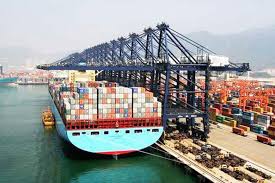
The Bangladesh Garment Manufacturers and Exporters Association (BGMEA) recently said the readymade garment (RMG) sector is facing a crisis in shipments of finished products due to shortage of road transport, affecting global buyers’ confidence. Though student protests are over, the transport situation is yet to be normal, BGMEA president Mohammad S Rahman said.

Some foreign buyers have already cancelled their trips to the country and if the transport situation remains unchanged, a good number of apparel companies will face stock lot, he told a press conference.

Factory owners will be compelled to opt for expensive air freight if this continued, he feared.

Hundreds of containers of imported raw materials are waiting at ports for delivery, Bangladesh newspaper reports quoted him as saying. (DS)

Source:https://www.fibre2fashion.com/news/textile-news/bangla-rmg-sector-in-trouble-due-to-transport-shortage-243952-newsdetails.htm

Post office to slash e-money charge

scion industrial engineering

We’re sincerely trying to lower EMTS charge significantly in competition with private mobile money transfer networks –Says Postal Department DG

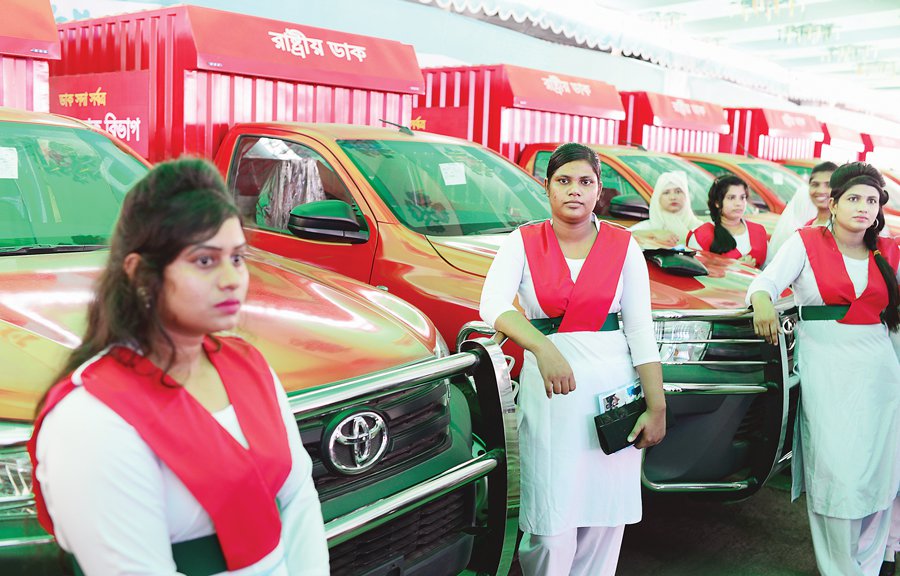
Staff Correspondent: Postal department is set to substantially slash charge for its mobile money order service soon, a finance division official said.
The state entity charges senders more than the privately-run mobile money transfer ecosystem in a highly competitive market, he added.
To this end, finance ministry will sit later this month to discuss and find a way out to gain a competitive advantage over rivals. Postal department runs mobile money order service, known as ‘Electronic Money Transfer Service (EMTS)’.
Postal department sent a proposal to finance ministry last year to lower money transfer charge to nearly 50 per cent, he mentioned. It is finding ways to restore the facility that the public would use as a means of secure money transfer, according to a senior postal official.
When asked, postal department director general Sushanto Kumar Mondal said, “We’re trying to revive our glory of money order. Finally, we’ll be able to reach our goal.”
“We’re sincerely trying to lower EMTS charge significantly in competition with private mobile money transfer networks,” he told.

“The government’s income will increase 100 per cent from the mobile e-money sector if the proposed charges are implemented finally,” Mr Mondal mentioned earlier.

An official told the sorry state of electronic money order service which turned out to be a major generator of revenue.

But the service has faced a stiff competition for the private-sector mobile payment system, he said.

“We’re trying to revive our past glory of money order. Finally, we will be able to reach our goal,” he added.

The official said, “We have sent a proposal to the finance ministry early of 2017 in this regard.”

Overall, postal department is making profits other than the electronic money order service, he cited.

As the EMTS is available until evening, analysts said, senders mostly use private transfer services like bKash, Rocket and other money transfer services.

Private mobile money transfer service is an easy and fast way to send money to a receiver’s mobile phone anytime a day, they said.

The government earned only Tk 13 million from money order-related transactions in fiscal year (FY) 2016-17.

It was Tk 282.30 million in FY ‘12, a 95.4 per cent decline, according to the document received.
The number of money orders was 4.88 million in FY ‘12. It reduced to 0.58 million in FY ‘17, it showed.

In FY ‘18, the department’s total income stood at Tk 3.74 billion, a 24 per cent rise compared to the same period a year ago, a high official said.

There are 9,886 post offices that render services to more than 120 million people.

Source:http://www.dailyindustry.news/post-office-slash-e-money-charge/

PM seeks teachers’ support to continue development pace

scion industrial engineering

Staff Correspondent: Prime Minister Sheikh Hasina yesterday sought the support of the university teachers in the coming election to continue the country’s current pace of development.
“We want your support so that country’s present pace of development continues, as all our works, those we did from 1996 to 2001, were destroyed after the change in government in 2001,” she said.
She was addressing a ‘University Teachers’ Conference’ organized by the Federation of Bangladesh University Teachers Association (FBUTA) at Bangabandhu International Conference Centre.
The prime minister said, “Bangladesh would go forward, it doesn’t matter whether we are in power or not. We will come to power if we get people’s mandate.” “And, I would have no regret if we don’t come to power again,” she said adding that “however I expect that you would take care of the pace of development that we have already achieved.”
The prime minister said, “We want to take forward the country” to make it a poverty and hunger free nation as dreamt by Father of the Nation Bangabandhu Sheikh Mujibur Rahman.

“But a nation is unable to get rid of poverty and hunger without education. So we always give importance to education and teachers proactive role in this regard,” she said.

Sheikh Hasina said her government has already done everything that it should do for the teachers including their salary hike and service age limit.

“Side by side we give importance to research through which we have made the country self reliant in food, fish, fruits and vegetable production,” she said.

Instead of making the existing universities more crowded, Sheikh Hasina said her government is willing to build more universities in new areas to allow the students to have their higher education from their house.

“It will also help the students to remain under vigilance of their guardians and society during their studies and debar them from being associated with militancy and anti-social activities,” she said.

Sheikh Hasina said her government has brought the Madrasa education to the mainstream of the society, creating opportunities for about 15 million children to get the scope of higher studies.

“Bangladesh was born with secular spirit and we want to build the country in that way so that superstation and communalism don’t grasp our children.”

About the demands of the university teachers the prime minister asked them to give their demands in writing saying her government may consider those demands if it comes to power for next tenure.

Source:http://www.dailyindustry.news/pm-seeks-teachers-support-continue-development-pace/

Bhutan graduates from LDC

scion industrial engineering

Bhutan has finally graduated from the list of Least Developed Countries (LDC), the United Nations’ Committee for Development Policy has announced. Bhutan has become the second country in South Australia to graduate after Maldives.

Along with Bhutan, Kiribati, Sao Tome and Principe and the Solomon Islands have increased national earning power and improved access to health care and education, making them eligible to exit the group of LDCs.

“This is an historic occasion,” said Jose Antonio Ocampo, chair of the Committee for Development Policy (CDP), noting that only five countries have graduated since the UN established the LDC category in 1971.

LDCs are assessed using three criteria: health and education targets; economic vulnerability and gross national income per capita.

Countries must meet two of the three criteria at two consecutive triennial reviews of the CDP to be considered for graduation.

The Committee will send its recommendations to the UN Economic and Social Council (ECOSOC) for endorsement, which will then refer its decision to the UN General Assembly.

Globally, there are 47 LDCs, according to the UN Office of the High Representative for the Least Developed Countries, Landlocked Developing Countries and Small Island Developing States.

The majority, 33, are in Africa, while 13 can be found in the Asia-Pacific region, and one is in Latin America.

In the 47 years of the LDC category’s existence, only five countries have graduated (Botswana, Cabo Verde, Equatorial Guinea, Maldives and Samoa)

The CDP said two more countries, Vanuatu and Angola, are scheduled for graduation over the next three years.

Nepal and Timor-Leste also met the criteria but were not recommended for graduation at this time, due to economic and political challenges.

Bangladesh, Lao People’s Democratic Republic and Myanmar met the graduation criteria for the first time but would need to do so for a second time to be eligible for consideration.

Source:http://www.bhutannewsnetwork.com/2018/03/bhutan-graduates-from-ldc/

ADB loans to support secondary towns

Scion Industrial Engineering

The Board of Directors of the Asian Development Bank (ADB) has approved a $10 million loan to help develop the secondary towns of Samdrup Jongkhar, Sarpang, and Trashigang in becoming economic hubs, spurring more inclusive growth and balanced urban development in Bhutan.

“The growth of Bhutan’s secondary towns is constrained by deficiencies in infrastructure and basic urban services resulting from inadequate urban planning, limited resources, and weak urban institutions,” said ADB Urban Development Specialist Ms. Shinjini Mehta. “ADB’s support will help the three secondary towns reach their high economic potential with the provision of quality infrastructure thereby facilitating vibrant economic activities in these towns.”

The project is in line with the Government of Bhutan’s strategy for urbanization that aims to groom secondary towns, which suffer from infrastructure deficits and urban management issues, into regional economic hubs through the development of trade, transport, logistics, and manufacturing.

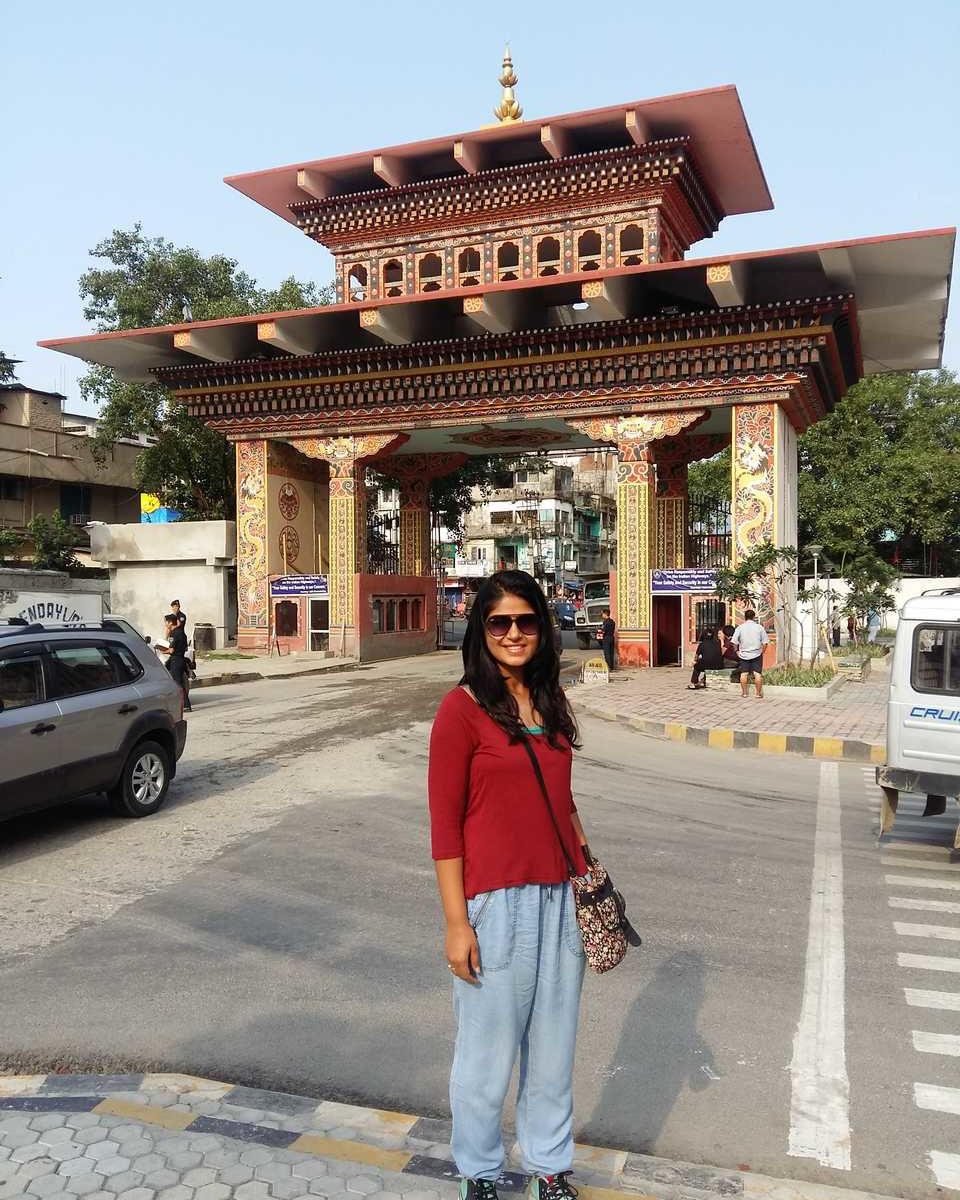
ADB’s support will improve water supply and sewerage networks in Samdrup Jongkhar, a gateway town to India’s Assam state, which is a key border town in the South Asia Association for Regional Cooperation road corridor 5. Piped water supply, meanwhile, will be provided in Sarpang’s new satellite town along with drainage and road infrastructure development, which will enable investments in housing and business development in the area.

Samdrup Jongkhar and Sarpang, located in the southern border region of Bhutan, currently get less than 8 hours of water supply. This highlights the need for the development of quality urban infrastructure, with both towns being located in the vicinity of two of the four industrial estates being developed by the government to promote manufacturing and create jobs.

The project will improve water supply services and non-revenue water management as part of a larger urban development plan in Trashigang, the largest urban center in eastern Bhutan. With the town’s recent access to air connectivity and strategic location in the east-west highway, Trashigang is being billed as an important tourist gateway to the less-explored areas in the eastern part of the country.

Total cost of the project, which will also support institutional capacity development for municipal infrastructure assets management, is $12 million, with the Government of Bhutan contributing $2 million. It is expected to be completed in July 2023.

ADB, based in Manila, is dedicated to reducing poverty in Asia and the Pacific through inclusive economic growth, environmentally sustainable growth, and regional integration. Established in 1966, it is owned by 67 members—48 from the region. In 2017, ADB operations totaled $32.2 billion, including $11.9 billion in cofinancing.

Source:http://www.bhutannewsnetwork.com/2018/06/adb-loans-to-support-secondary-towns/

ADB grants to improve health services in Bhutan

Scion Industrial Engineering

The Asian Development Bank’s (ADB) has approved a US$20 million grant financing package to support Bhutan to improve the equity, efficiency, and sustainability of the country’s health system.

ADB’s support, which includes a US$14 million policy-based grant and a US$6 million project grant both sourced from the Asian Development Fund, will help Bhutan to progress toward universal health coverage based on the principles of primary health care and to achieve targets under the Sustainable Development Goals.

“Investing in an effective and efficient healthcare system is crucial for the pursuit of sustainable and inclusive development of countries like Bhutan,” said ADB Senior Health Specialist Ms. Hayman Win. “ADB’s assistance will help Bhutan’s health system to become more relevant to the evolving needs of the population with an increased focus on primary health care.”

Bhutan has had great success in improving its health system over the years, with life expectancy at birth improving from 43 years in 1985 to 70.2 years in 2017. Child immunization coverage has also been sustained at more than 95% since 2010. However, there are some challenges, including increasing cost of healthcare, rise in non-communicable diseases, and persistent regional disparities in health outcomes, which are straining the current health service delivery.

The Health Sector Development Program will strengthen the delivery of primary health care, especially in underserved areas of Bhutan. It will establish five satellite clinics on the outskirts of urban areas, upgrade existing primary healthcare facilities, provide medical equipment, improve quality assurance, and promote healthy behavior changes. The program also has policy measures to strengthen the Bhutan Health Trust Fund for financing primary health care commodities and to enhance health information management.

A $500,000 grant, financed by ADB’s Technical Assistance Special Fund, will fund capacity development to support implementation of the program, which is expected to be completed by August 2023.

Source:http://www.bhutannewsnetwork.com/2018/10/adb-grants-to-improve-health-services-in-bhutan/

India offers increased assistance to Bhutan

scion industrial engineering

India has already offered to increase financial assistance to Bhutan in next five-year plan beginning 2019 as it reaches out to woo Prime Minister-elect Lotay Tshering.

His party DNT has won the election held last week and is waiting to be sworn in as head of the government.

During current 11th Five-Year Plan (2013-18) India contributed Rs 45 billion, which formed 68 per cent of the total external assistance received by the country. In addition, India committed assistance of Rs 5 billion crore under an economic stimulus plan.

Tshering had highlighted during election campaign that his priority will be to enhance health care facilities in rural areas. Indian newspapers cited sources to say, India may prioritise health sector for new funding.

Indian Prime Minister Narendra Modi reached out to Tshering within hours of the election results last Friday and promised India’s support to his priorities. Tshering has made it clear that he will be guided by the king in conducting foreign policy and that ties with India are non-negotiable.

The Druk Nyamrup Tshogpa (DNT’s) manifesto, with its slogan ‘Narrowing the Gap’ has promised social and economic development, striving to transform Bhutan to a developed country by 2045. The focus of the manifesto is to provide equitable health services including multi-speciality hospitals across Bhutan, improve digital connectivity, build more road, civil aviation and power infrastructure, among other developmental goals.

In the right competition, DNT and DPT exchanges heated allegations. DNT supporters hit out against the DPT for its leanings towards China and an anti-king party.

SOurce:http://www.bhutannewsnetwork.com/2018/10/india-offers-increased-assistance-to-bhutan/

As Bhutan’s economy grows, so does its waste problem

Scion Industrial Engineering

Despite its tiny population, Bhutan’s economic growth has led to increasing urbanisation and problems associated with biodegradable waste, which threatens the beauty of one of the most pristine environments in the world.

Bhutan’s rapid economic development over the last few decades has been striking. According to World Bank data the GDP of the country grew from USD 135 million in 1980 to USD 2.2 billion in 2016, or sixteen times. Based on its indicators, Bhutan has been recommended for graduation from Least Developed Country status by the UN.

While this is good news for the country, it is also accompanied by some negative indicators.

The National Environment Commission’s (NEC) report “Bhutan State of Environment, 2016” has pointed out that, with rapid socio-economic development, increasing population and urbanisation, the country is seeing an increase in the amount of solid waste generated. More problematically the composition of that waste is shifting from biodegradable to non-biodegradable waste.

Nedup Tshering, a retired civil servant and environmentalist who started a civil society organisation based in Thimphu, Clean Bhutan, said compared to other countries, waste in Bhutan is not a huge problem. However, it is growing rapidly, and within since 2014, when Tshering started his initiative, the waste produced by individual household has doubled from 250 grams a day per person to almost half a kilogramme per person now.

Disposable diapers are becoming a growing concern across the country as more people have started to use them and they do not degrade well even in landfills, stated the NEC report. Another issue of concern is that municipal solid waste also contains hazardous and electronic waste.

Some examples of hazardous household waste are batteries, household cleaning products, cosmetics, automobile maintenance products and electronics such as phone, television sets, bulbs, and tube-lights.

With development and modernisation, there is growing trend of people discarding electronics like phones, laptops and TVs for newer models, which could lead to growing amount of e-waste, said the NEC officials.

In 2017, the Global Waterkeeper Alliance and Clean Bhutan launched a water quality monitoring programme and found that key rivers in Bhutan contained significant levels of E.Coli bacteria.

One of the major problems with the problem specifically to Bhutan’s capital is that the sewer system is connected directly into the river. Furthermore the leachate (the black water) from the wasteland fields in Memelakha also falls down into the Olarongchu river that connects to it. “If we don’t control this today in a decade or so, we will find Olarongchu quite toxic,” said Tshering.

The National Environment Commission said that their surveys and monitoring indicate that Bhutan’s water resources are healthy at the macro level, but there is an increasing concern that population growth, burial customs, and fast urbanisations are outpacing the installation of sewerage treatment and solid waste collection. This is threatening the water quality in downstream areas

Tshering explained that part of what is needed is a change in customs. People throwing waste into rivers is not a new thing, but as Bhutan has grown more prosperous and the urban areas have enlarged, the type and amount of waste have changed. There is far more plastic and other non-biodegradable waste. People have started changing their habits, with more segregation of waste, but the facilities to manage the waste is still catching up.

So far Clean Bhutan has conducted 115 cleaning campaigns in towns and villages around 16 districts involving 4,431 volunteers, and 20 clean-up programs along the four rivers of Thimphu-chu, Paro-chu, Punakha-chu (Po-chu/Mochu) and Chubachu stream in Thimphu. (“Chu” means water in Dzongkha, and many rivers are named after a prominent place with the chu suffix added.) It has also conducted 44 such clean-up campaigns along trail and trek routes.

Big city problems
But the problem is growing ever larger as the municipal services struggle to catch up. Tshering said that until a few years ago the trash was mostly found in the towns, but now it is also found in the jungle and rivers. The periphery of Thimphu is full of solid waste, which he attributes to the lack of facilities provided to people.

The NEC envisaged that by 2020, half of the Bhutanese population will live in urban areas. The two urban centres of Thimphu and Phuentsholing exhibit a complexity of environmental and social issues including the problem of municipal wastes. This growth is enormous, considering that Thimphu was a small hamlet in the 1960s before it was declared the capital of the country. It is now the most populous city in the country, with Phuentsholing, a border town in the south, close behind

“At this rate, the issue of solid waste management and associated environmental and social problems will be more pronounced in the absence of a proper solid waste management system,” said the NEC report.

According to Thimphu City Cooperation, less than 15 per cent of total households in the city are connected to the sewer system and rest rely on individual septic tanks. Between June 2010 to December 2012, 2,410 trips of vacuum tanker was used to empty 7,240 cubic metres of sewage. Domestic sewage, uncontrolled seepage, or overflows from septic tanks are some of the main sources of water pollution.

Additionally, in places like Thimphu and Phuentsholing where there are large concentrations of automobile workshops, the discharge of waste oil and other effluents is a significant source of water pollution.

Yeshey Wangdi, Chief Environment Officer with Thimphu thromde (municipal authority) said that the solid waste in Thimphu is growing along with the growth of the population of the city. As per the 2005 census, Thimphu’s population was 95,000, which he said is expected to have increased to more than 150,000. “Waste generation is directly dependent on population,” Wangdi said.

Since 2014 the municipal authority has outsourced the collection and disposal of waste to two private companies for. The two companies have to collect waste three times a week from every household. However, the thromde has been receiving many complaints from public that the waste collection is not happening on time. This he attributed to the breakdown of waste collection trucks or mismatch of collection timing with officer goers.

Another challenge is that unlike other countries every building has both commercial and residential functions. The collection services struggle to figure out when to send people where, whether during office hours, or not.

He said despite various problems, the department is committed to convert the waste problem into an opportunity. “Our present motto is reducing, reuse and recycle,” he said. Wangdi said the composition of the waste was 50 per cent organic, 17 per cent paper, and 12 per cent plastic. Therefore, the focus thromde’s focus is to “make trash into cash.”

Rules and regulations
Environmental officials also pointed that the problem is not just with the waste, but failure to implement the rules. A few years ago Thimphu thromde passed a rule which requires people to pay a fine if caught throwing waste in places other than disposal areas. In practice this rule seems totally nonexistent.

Yeshey Wangdi said that the rule is being implemented and that there were several cases reported to the city. In the first instance the thromde asks people to pay the fine, if they do not, the case is forwarded to court. However, no case has so far been reported to court.

Environmentalists said that there are at least nine Acts that are directly or partially related to solid waste management. However, implementing and collaborating agencies and stakeholders were faced with resource challenges. As Bhutan continues on its growth story, these gaps will also continue to grow, creating a bigger and bigger challenge to clean up in a country which had been, until recently, a pristine environment.

Source:https://www.eco-business.com/news/as-bhutans-economy-grows-so-does-its-waste-problem/

Bhutan economy and Industrial growth

Scion Industrial ENgineering

Craft manufacture is the predominant industrial occupation, and homespun textiles—woven and embroidered cottons, wools, and silks—are the most important products. Other Bhutanese handicrafts include daphne paper; swords; wooden bowls; leather objects; copper, iron, brass, bronze, and silver work; wood carvings; and split-cane basketry.

The economy in the 21st century has become increasingly dominated by the hydroelectric sector, and the building of new power projects has led to double-digit growth in the transport and construction sectors, including a number of local cement operations. The country’s first cement plant was completed in the border town of Penden in 1982 by India, to which the bulk of its output is exported. Bhutan’s first mega power plant, the 336-MW Chukha hydroelectricity project (CHEP), came on line in early 1987, having been first agreed to as a turn-key operation with India in 1961, on what has become a standard arrangement of 60% grant and 40% concessional loan. 70% of the power generated by the CHEP is exported to India, and by 1996 export receipts were sufficient to produce a trade surplus with India. Nevertheless, it is estimated that only about 3% of Bhutan’s hydroelectric potential has yet been exploited, and even less of its industrializing potential. The decade following the opening of the Chukha facility, 1988–1998, saw more government resistance to industrialization of Bhutan than support, and progress has been slow. In 1988, in conjunction with the country’s sixth economic plan (1987–1992), the Bhutan Development Finance Corporation was established to promote small- and medium-scale businesses. A second cement plant was established in Nanglam by the late 1980s, and another, in 1995, in the same town, by an Indian investor, along with several manufacturing plants producing carbide, particleboard and other products destined for the Indian market, but Bhutan industrialization was hobbled by stridently anti-foreign, anti-modernity policies. In fact, security problems in Nanglam have caused to government to close down the Project Office there and shift to a temporary office in Gelepu. There has been some renewed opening in the late 1990s, but by the end of 2002 only one rather small power plant and part of a second have been brought on line: the India-sponsored 60 MW Kurichhu hydroelectric project, and the first, smaller phase of the Austria-sponsored 65 MW Basochu hydropower project. The truly major, and fully India-funded, 1020 MW Tala Hydro-electric Project (THEP) was begun in 1998 with targets for completion in 2004 and 2005. Plans for the even more ambitious Sunkosh Multipurpose Project (SMP), with installed capacity envisioned at 4,060 MW, were developed by the India’s Central Water Commission in 1997. It is expected to take 10 years to complete. Two other projects that have been submitted to government of India for consideration are a 360 MW plant at Mangdue Chu and a 870 MW plant at Puna Tsangchhu.

There are a large number of small, privately owned sawmills throughout Bhutan since most of its domestic energy actually comes from firewood, not electricity. A sawmill with a furniture-making unit has been established in Thimphu. Industrial estates have been set up at Phuntsholing and Geylegphug, and the Ninth Five Year Plan (2002 to 2006) calls for five to be located around the country.

Besides cement, there is a narrow range of other manufactures exported—ferro-alloys, calcium carbide, processed foods and particleboard—which tend to rely on energy-and capital-intensive methods and expatriate labor. Bhutan Ferro Alloys Ltd., which makes ferrosilicon and exports to India and Japan, began operations at a new plant at Pasakha in April 1995. Calcium carbide is produced at several private dolomite-mining operations, as well a private and joint public-private limestone mining operations. Manufacturing as a share of GDP has risen from 3.2% in 1980 to 8.2% in 1990 to 12% in 1998 to an estimated 20% in 2001. It is likely that with the emphases in the Ninth Five Year Plan on commercial and private sector development as means of achieving economic self-sufficiency and generating employment, this share will continue to grow.

Source:https://www.nationsencyclopedia.com/Asia-and-Oceania/Bhutan-INDUSTRY.html

Private sector development is the main driving force behind economic growth

Scion Industrial Ingineering

Private sector development is the main driving force behind the national economic growth, noted Vice President U Henry Van Thio in northern Yangon yesterday morning.

He was speaking at the opening of a new factory where 225 million aerated concrete blocks-AAC and 90 million autoclaved pressed concrete bricks-APC are manufactured annually.

The State is encouraging the public-private partnership-PPP in its mission of prioritizing the private sector development, the vice president explained, adding, its PPP programme is privatizing the convertible industries.
Under the State’s PPP programme, Mother Industrial Co., Ltd converted a government-owned sand brick factory in Insein Township north of Yangon into an advanced industry, manufacturing AACs and APCs beginning 24 this month. The vice president also highlighted the importance of industrial development for the export promotion, realization of an economic model that strikes a balance between the agricultural and industrial sectors, and job generation of citizens living in the country and returning from abroad.

Union Minister for Industry U Khin Maung Cho and Managing Director of the company U Soe Yi also gave speeches at the ceremony in which the VP unveiled the factory plaque and the minister, Yangon Region Hluttaw Speaker U Tin Maung Tun, Region Minister for Rakhine Affairs U Zaw Aye Maung and officials formally inaugurated the factory.
The Global New Light of Myanmar

Source:http://www.industry.gov.mm/en/industry-news/719