Ministry of Industry’s achievements in the past two years

Scion Industrial ENgineering

With the aim of strengthening effective managements of the country, Ministry of Industry has set up four polices and two visions in accordance with 12 economic objectives of the country.
Ministry of Industry has aimed at utilizing modernized and advanced techniques of agriculture to develop Agro-base industries, Agri-Business, Agro-Products, and continue the task for the establishment of Heavy Industries.
In order to strengthen increased exports, efforts are being made to drive the implementation of small and medium enterprises can stimulate substitution of imports with domestic products and also strengthen increased exports.
Moreover cooperation between private sectors and inviting participation has made to invite technical know-how and investments. The Ministry also tries to increase Production of Value-Added Commodities by effective utilization of natural resources and raw materials. It is of great importance to ensure sustainable development without environmental impact and to utilize energy efficiently and renewable energy.
Quality of products
To assess the quality of products of micro, small and medium enterprises nationwide, region and state governments are urged to exhibit local products of micro, small and medium enterprises-MSMEs products in respective regions. In order to gain balanced growth, MSMEs are required to cooperate more with each other at regional and national level.
In accordance with the ASEAN Strategic Action Plan for SME Development ASEAN SAP SMED 2016-2025 plan, Myanmar is also working for growth of the country’s SMEs. Therefore a holistic way of viewing is needed to address the challenges and obstacles facing in the country.

Early stages of industrialization
Myanmar is still in the early stages of industrialization, around 57% of the total population is employed in the agricultural sector and there can be seen a stagnation of growth. Myanmar is highly dependent on exports of natural resources like natural gas, agricultural products, a few primary commodities and labour-intensive manufacturing products with low value-added. The Ministry of Industry has focused on how to promote the private sector based
on industrial modernization.
The majority of the manufacturing industries are labour-intensive products like textiles and garments. That’s why it is needed to produce higher-value commodities which can achieve long-term economic growth in the long run. In this regard, the ministry has put priorities on the betterment of Human Resource Development (HRD), along with Small and Medium Enterprises Development and Restructuring of State-owned enterprises. It is needed to invest in the education sector towards the development of high-skilled human resources.

Advantage of labour market
Myanmar is rich in natural resources and has the comparative advantage of low-cost labour which can contribute the economic growth.
Moreover, Myanmar has great growth potential due to its advantageous geographical location at the juncture of the Association of Southeast Asian Nations (ASEAN) and borders of the world’s most dynamic and fast-growing countries such as China and India. It is of great importance for the rural communities to benefit from the economic growth and industrial development.

Small and Medium-sized Enterprises (SMEs)
SMEs are the main driving force of the country’s economy and the government is striving to obtain cash investments, main infrastructure requirements of electrical power and obtaining loans without collateral.
According to a research conducted by Central Statistics Organization, 98 per cent of the more than 120,000 businesses registered in Myanmar are SMEs. In the employment sector, of the 21.9 million workers, 83 per cent are working in un-registered SMEs.
As for the entrepreneurs, they should take advantage of the Myanmar Companies Law, which guarantees to consider a company with a 35 per cent share of foreign investment as a citizen-owned company.

Human resource development
Ministry of Industry sends government staff to foreign countries where they can attend workshops and seminars with the aim of empowering human resource development and raising living standards as well as socio-economic status of the country.
While the demand for skilled labour is high in Myanmar, there are not enough trained workers to meet the needs of the job market. And yet youths and young adults want skill training and employment opportunities. The Ministry of Industry has opened many vocational training schools with the aim of creating job opportunities for the youths in Myanmar.
During the training period, the trainees have to visit the industrial zones and learn practical experiences. The one who got the certificate of successful completion of the course can join any of the factories or mills in any country. The school (SITE) admission has increased up to the some 240 students. The school has taught auto industrial production system and its technology, computer-controlled metal cutting and designing, management and technology on water and sewage, technology on renewable energy such as solar and wind power and training for skill on wood finished products and furniture.
Source:The Global New Light of Myanmar

Source:http://www.industry.gov.mm/en/article/news/904
African-American attacks Bhutanese business pretending to be white supremacist

A Bhutanese businessman is the victim of a false flag assault in Charlotte by an African-American man who made the attack on the man’s store appear to be the work of white supremacists.

North Carolina police arrested on Sunday the man allegedly seen on a surveillance video setting fire to the store on Thursday and leaving a note threatening to torture immigrants and refugees and signing it “White America”, The Charlotte Observer newspaper reported.

The Central Market, described as Nepali-Indian establishment that sells South Asian food and gifts, is owned by Kamal Dhimel, a refugee from Bhutan.

On Thursday night, the store’s front door was set on fire, a glass pane on the door was smashed with a stone and the note signed “White America” and warning that refugees and immigrant business owners would face torture “if they did not leave and go back to where they came from” was left there, according to police quoted by the newspaper.

Investigators said a video surveillance of the incident showed a “black male suspect”, the Observer reported.

African-American man Curtis Flournoy, 32, has been arrested and charged with ethnic intimidation, sending threatening letters, burning a business building and using incendiary material, according to the newspaper.

Charlotte City Council member Dimple Ajmera told the Observer that she was frustrated to see the hate crime take place.

“I’ll continue to work around the clock to make sure that all businesses and all the residences feel safe,” she added.

Last month, Harnish Patel, an Indian-American businessman in Lancaster in neighbouring South Carolina state, was shot dead outside his home. There have been no arrests in the case.

While attacks and threats against ethnic and religious minorities have always been a feature of America, activists and Democratic Party leaders have attributed recent incidents to President Donald Trump.

In some cases they have proved to be false flag attacks carried out by others and made to look like they were committed by white supremacists.

In the most notorious of those cases, a series of threats against Jewish institutions were sought to be linked by activists to the election of Trump, whose daughter is a convert to Judaism, and he was criticised for not acting on them.

However, an African-American man in the US and a Jewish man in Israel were arrested in connection with the threats.

In some places, including New York, false reports have been spread about raids on illegal immigrants to spook immigrant communities.

In February, an Indian-American woman, Ekta Desai, was harassed on a New York-New Jersey metro train by an African-American man who threatened her using foul language and said she should “get out of here”.

She uploaded the video of the harassment, but the Democratic New York city or state officials have not come forward to condemn it or take action against the man. US human rights organisations have not reacted to it either.

In February, in a case directly attributed to white racism, Indian engineer Srinivas Kuchsbhotla was shot dead and Alok Madsani was injured in Kansas, after they were mistaken for Middle Easterners or Iranians.

The alleged shooter, a white man, has been arrested and awaiting trial.

Last month, a Sikh in Kent, Washington State, was shot and injured by a man who shouted at him, “Go back to your country”. Authorities are still looking for the shooter.

In another case last month, an Indian woman Sasikala Narra, 38, and her six-year-old son, Anish, were stabbed to death in New Jersey. That case has not been solved either.

Source:http://www.bhutannewsnetwork.com/2017/04/african-american-attacks-bhutanese-business-pretending-to-be-white-supremacist/

Govt clears 500 acres of more land for Japan at Araihazar economic zone

scion industrial engineering

The Executive Committee of the National Economic Council or ECNEC cleared a project to acquire 491 acres of land for the economic zone in March last year.

After Japan sought more land, the ECNEC passed a revised proposal approving another 500 acres of land for the economic zone on Tuesday.

Now the estimated cost of the revised land acquisition project is around Tk 32 billion, according to Planning Minister AHM Mustafa Kamal.

The ECNEC approved a total of 11 projects at an estimated cost of around Tk 64.5 billion on Tuesday.

The other projects included dredging of the Padma River and saving its left bank in Dhaka’s Dohar Upazila at an estimated cost of around Tk 15 billion.

Source:https://bdnews24.com/economy/2018/08/07/govt-clears-500-acres-of-more-land-for-japan-at-araihazar-economic-zone

Bangladesh signs MoU with Nepal on hydro-electricity

scion industrial engineering

Apart from the import of hydro-electricity from Nepal through India, the MoU includes investments by Bangladesh in Nepal’s power sector.

Nasrul Hamid, state minister for power, energy and mineral resources of Bangladesh, and Barsha Man Pun Ananta, Nepal’ minister for energy, water resources and irrigation, signed the MoU in Kathmandu on Friday afternoon.

Hamid thanked the Nepal government for the MoU saying: “It was signed after a long wait.”

The state minister focused on the friendly relations between the two countries and said both should increase cooperation for development in power and communications sectors.

According to Bangladesh’s master-plan, a part of the goal to supply 40,000MW power by 2030 will come from imported power.

Nepal has the prospects of producing 40,000MW of hydropower and Bangladesh’s state-run and private companies can invest in future projects in the Himalayan country, said Hamid.

At present, Nepal imports 400MW electricity from India but has set a goal to produce 15,000MW hydropower in 10 years, which is being implemented, according to Barsha Man Pun Ananta.

He spoke about investment prospects in Nepal and the possibility of trading in power.

Hamid paid a courtesy visit to Nepalese Prime Minister KP Sharma Oli on Friday. The MoU was signed after a bilateral meeting with the energy minister of Nepal.

A working group and a steering committee will work to increase the cooperation in the power sector between the two countries, according to the MoU.

Hydropower is comparatively cheap and environment-friendly. The Awami League government has been working to increase hydropower cooperation with Nepal and Bhutan.

Bangladesh signed an MoU with an Indian company last year to import 500 mw power from Nepal. GMR Energy in India has started a project to produce 900MW of hydropower. The Bangladesh Power Development Board has signed an MoU with GMR Energy to buy electricity from the project through a cross-country grid via India.

Bangladesh has been importing 500MW of electricity from India’s Bahrampur and 150MW from Tripura. The government plans to import more power from India in future.

Source:https://bdnews24.com/economy/2018/08/10/bangladesh-signs-mou-with-nepal-on-hydro-electricity

ADB approves additional $110m for Bangladesh urban health services

scion industrial engineering

The Asian Development Bank has approved $110 million in additional loans for a project to improve access to urban primary healthcare services in Bangladesh through public-private partnerships.

“ADB’s support to the government-led Urban Primary Health Care Services Delivery Project approved in 2012 has been filling a vacuum created by the lack of urban public primary healthcare by increasing access to quality services, especially for poor households,” ADB Social Sector Specialist Brian Chin said in a statement on Tuesday.

“The new financing will focus on strengthening the service delivery system, building on the results of the 2012 project and two previous projects, to meet unmet demands and develop self-reliance in the running of the system.”

The project is recognised as an innovative model of partnership between the government, which contracts out health service delivery, and service providers (mainly nongovernment organisations).

As originally financed in 2012 with a $50 million ADB loan and $20 million cofinancing, it is one of the largest public private partnership projects for primary healthcare delivery in South Asia, according to the statement.

Previously, ADB provided a $40 million loan and $4.5 million cofinancing for a first project to support health services in four cities during 1998–2005.

A second project followed in 2005-2012 backed by a $30 million loan, $10 million grant, and $30 million cofinancing widening the support to six cities and five municipalities.

As originally envisaged, the 2012 project covers 10 cities and four municipalities representing about 17 percent of the total 57 million urban population.

According to a review in 2015, the project has been providing services to more than 23 million clients, of whom 74 percent were female, and has constructed a network of 180 health facilities and 224 satellite clinics.

The project is also building experience in the management and contracting of health service delivery, as well as monitoring and evaluation systems.

The review concluded that the project merits continuation and expansion to ensure that the growing demand for healthcare in urban areas is met.

The additional financing will cover the cost of a five-year extension to assist the government to strengthen local health systems and continue to expand the PPP system of contracting to service providers, ADB said.

It expands coverage to an additional city and 10 municipalities, and will build eight additional reproductive healthcare centres and 24 primary healthcare centres.

The sustainability of health services will be ensured through a series of management, institutional, and staffing reforms. The new financing will build on previous efforts toward climate change mitigation by adopting solar panels, rainwater harvesting systems, and flood drainage.

The Urban Climate Change Resilience Trust Fund, financed by the Rockefeller Foundation and the governments of Switzerland and the United Kingdom, will provide a $2 million grant, to be administered by ADB.

The Bangladesh government will contribute $30 million toward the cost of the additional financing, while the United Nations Population Fund will provide $1.5 million in-kind technical support. The project completion date is March 2023.

Source:https://bdnews24.com/economy/2018/09/19/adb-approves-additional-110m-for-bangladesh-urban-health-services

World Bank vice president arrives in Dhaka on Sunday

Scion Industrial Engineering

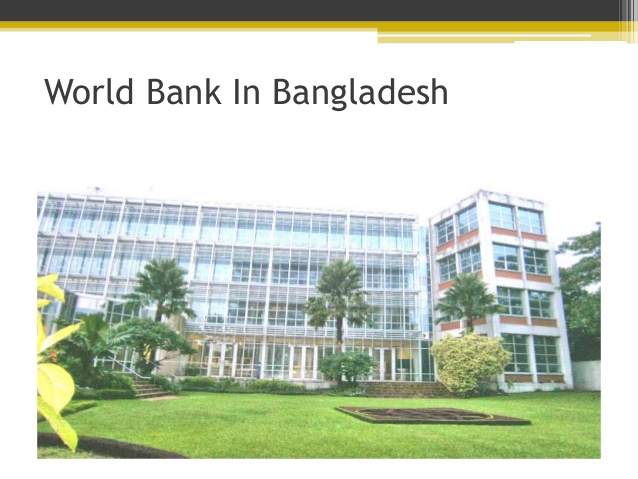
World Bank Vice President for the South Asia Region Hartwig Schafer will arrive in Dhaka on Monday for talks on the Rohingya crisis and deepening Bangladesh’s connections to the international organisation.

Monday’s visit is the first since Schafer took up the post in July.

“Bangladesh has a remarkable story of cutting extreme poverty to half in record time. Other countries can learn from Bangladesh’s many development innovations and successes. I look forward to meet our partners and see first-hand the country’s journey to economic growth,” said Schafer.

“Despite its own challenges, Bangladesh has shown great generosity by sheltering nearly one million Rohingya people. The World Bank is working closely with the government to help address the needs of the Rohingya until their safe return to Myanmar and help build the country’s capacity to deal with the crisis.”

Schafer plans to visit the Rohingya refugee camps and meet with local officials and representatives from NGOs and civil society during a visit to Cox’s Bazar.

The World Bank has given Bangladesh a $400 million grant to help with the crisis.

It has also approved one of two operations – adding up to $75 million – to provide health services and education to the refugees.

Schafer is also scheduled to meet with government officials, including the finance minister and water resources minister, as well as private sector and civil society leaders.

He will also take part in the launch of a World Bank report titled ‘South Asia’s Hotspots: The Impact of Temperature and Precipitation Changes on Living Standards and visit the World Bank-supported Ghorashal power station project.

Prior to joining the South Asia region, Schafer was the vice president for global themes and as vice president for operations policy and country services and also served as World Bank’s country director for Djibouti, Egypt, and Yemen.

Source:https://bdnews24.com/economy/2018/09/22/world-bank-vice-president-arrives-in-dhakaon-sunday

KOICA ready to help Bangladesh become a developed country

Scion Industrial Engineering

Interacting with journalists on Tuesday, Joe Hyun-Gue Country Director of South Korea’s development agency, KOICA, said Bangladesh was a “priority” country when it came to development cooperation.
KOICA supports Bangladesh through grants, soft loans and technical cooperation and the ongoing country strategy, 2016 to 2020, is mostly focused on health, education, transportation and ICT.

The country director invited suggestions to support in other areas in need.

He said they are ready to continue to work with its partners in Bangladesh to help the country achieve the SDGs and other development goals.

One of Bangladesh’s strong development partners, Korea opened its embassy in Dhaka in early 1975, more than a year after the establishment of diplomatic relations in 1973.

Later, Korean entrepreneurs came to Bangladesh to set up garment factories, many of whom are still active.

A World Bank development report said the boom of Bangladesh’s readymade garment industry that wheels its economy is because of initial training from Korean Daewoo Corporation in 1979 when Bangladesh had no modern industry.

The corporation teamed up with Bangladesh’s Desh Ltd and trained up its 130 newly recruited and educated employees who later left Desh to start their own clothing businesses for the industry to flourish.

The readymade clothes are now the largest export earners of Bangladesh.

KOICA was established in 1991 with an aim “to fight global poverty” and started working in Bangladesh in the same year.

But the office was opened two years later in 1993 when it dispatched a group of volunteers.

So far it has completed 24 development projects that include the first-ever cyber crimes investigation capabilities centre. It is currently building Bangladesh’s first-ever super-specialised hospital in Dhaka.

Development Specialist of KOICA Bangladesh Office Biswajit Kumar Sarkar presented the details of the partnership strategy with Bangladesh during the interaction.

He said KOICA wants to be a “champion” in contributing to achieve SDGs and promoting Bangladesh to a developed country by 2041.

Their annual budget is over $14 million, he said. The country partnership strategy outlines how Korea’s comparative advantage, financing and consulting services can support Bangladesh achieve SDGs.

Some of the ongoing projects include modernization of training institute for chemical industries, establishment of the first-of-its-kind national institute for nursing, establishment of the e-government master plan for digital Bangladesh and illicit drug eradication and advanced management through IT.

KOICA Deputy Country Director Go Ahreum, and principal programme officer Md Khalid Hossain were also present during the interaction.

Source:https://bdnews24.com/economy/2018/09/26/koica-ready-to-help-bangladesh-become-a-developed-country

South-East Asia’s future looks prosperous but illiberal

Scion Industrial Engineering

THE young woman with the microphone cajoles, hectors and wheedles customers with the breathless enthusiasm of a livestock auctioneer at a county fair. She is standing behind a table stacked high with blue jeans; most of the milling crowd is dressed in lungyis, Myanmar’s skirt-like national dress. The fancy mall around them is anchored by a huge department store, dotted with banks and mobile-phone stalls and topped by a cinema and video arcade.

Myanmar has been growing so fast—by an average of 7.5% a year for the past five years—that the boom is reverberating in Mae Sot, just across the border in Thailand. Two years ago, says a longtime resident, the site of the mall was a swamp, and Mae Sot was a poky little border town with two small grocery stores. Today huge supermarkets, car dealers, electronics outlets and farm-equipment showrooms line the wide new road from the border into town, patronised by a steady stream of Burmese shoppers. Skeletons of future apartment blocks loom; the Thai government is building a new international airport. The Asian Development Bank (ADB) forecasts that Myanmar’s growth will hit 8% next year.

Source:https://www.economist.com/asia/2017/07/22/south-east-asias-future-looks-prosperous-but-illiberal?zid=306&ah=1b164dbd43b0cb27ba0d4c3b12a5e227

In dirt-poor Myanmar, smartphones are transforming finance

Scion Industrial Engineering

MYANMAR’S democratic transition sometimes seems marked as much by continuity as by change. Depressingly, the army continues its bloody persecution of Rohingya Muslims in the west, for example (see article). But elsewhere moves to open the country’s markets, started by the preceding military regimes, have gathered pace. New commercial and financial services are springing up.

Take Khin Hlaing, who owns Global Mobile Shop, a small store surrounded by tarpaulin-covered stalls selling fresh fruit in Hlaing Tharyar, an industrial area outside Yangon, the biggest city. He is one of almost 12,000 agents for Wave Money, Myanmar’s largest mobile-money transfer platform. Most days about 20 people use his shop to send funds to friends or family elsewhere in the country. One customer, who walks in wearing a long red longyi and delicately beaded top, says she was at first nervous about Wave. A clothesmaker, she now sends earnings through it twice a month at a cost of 500 kyat ($0.37) a go. She says Wave’s appeal is its “convenience”.

Souce:https://www.economist.com/finance-and-economics/2017/10/12/in-dirt-poor-myanmar-smartphones-are-transforming-finance?zid=306&ah=1b164dbd43b0cb27ba0d4c3b12a5e227

Japanese cars enjoy an afterlife in Myanmar, but not for much longer

scion industrial engineering

THE Japanese make cars that last but replace them relatively quickly. The average car in Japan is three years younger than in America. This combination of durable manufacturing and dutiful consumption of a prized national product works out well for the rest of the world; many countries import older Japanese cars in bulk. Secondhand vehicles fill vast parking lots in Japan’s port cities, awaiting shipment to New Zealand, the United Arab Emirates and elsewhere.

The third-most-popular destination is Myanmar, which imported over 80,000 used Japanese vehicles in the first nine months of this year, according to Japan’s International Auto Trade Association. Drivers believe that Toyotas, Hondas and Nissans can stand up to the country’s pockmarked roads, a faith not yet shown in South Korean and Chinese cars.

Source:https://www.economist.com/business/2017/11/04/japanese-cars-enjoy-an-afterlife-in-myanmar-but-not-for-much-longer?zid=306&ah=1b164dbd43b0cb27ba0d4c3b12a5e227