Bangladesh on way to be a gadget-making hub

scion industrial engineering

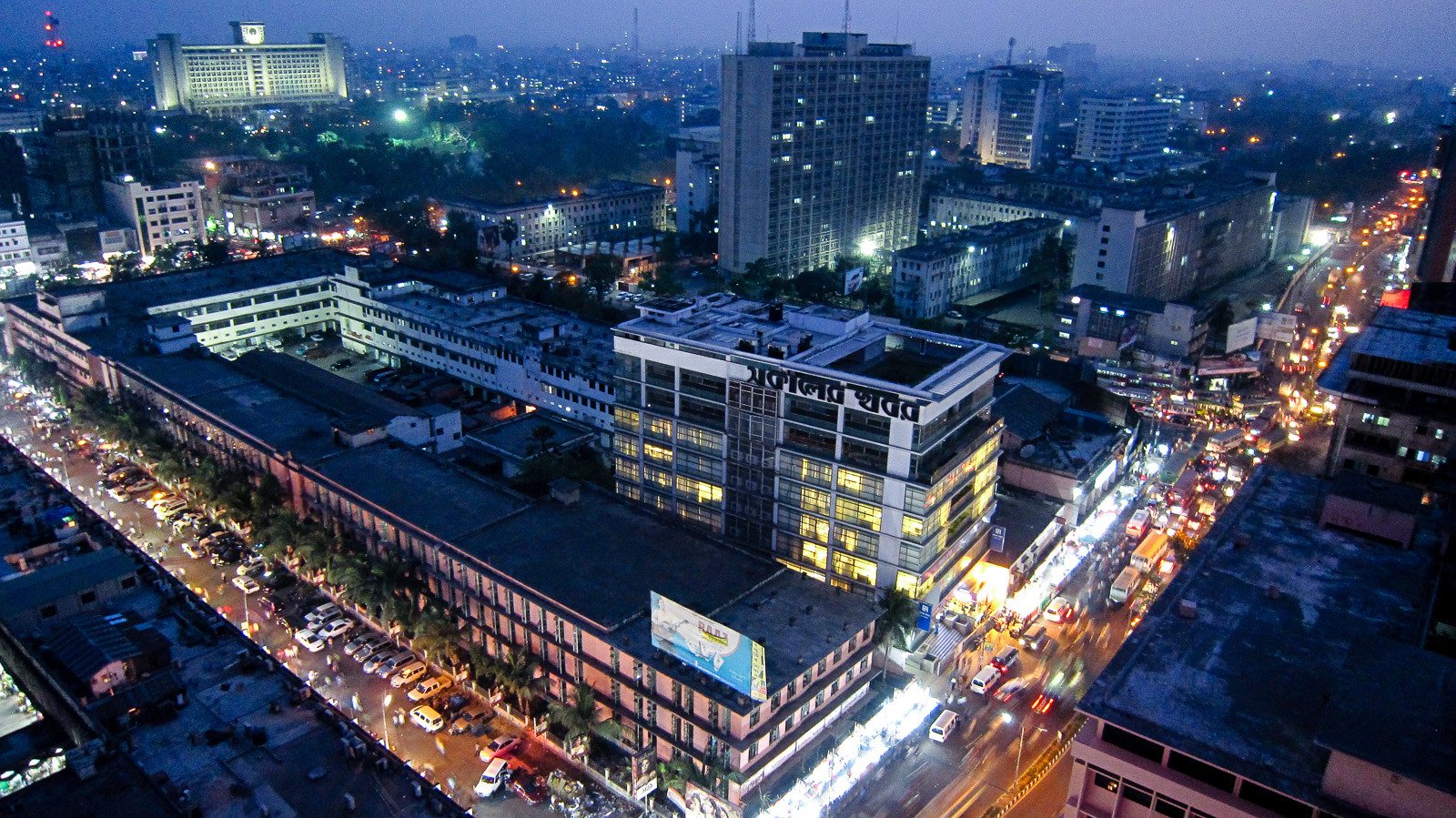
The availability of workforce at a competitive wage, growing domestic market demand and a favourable policy are some of the key factors that make Bangladesh an attractive hub for high-tech manufacturing, according to a survey.

In its report, International Data Corporation (IDC) found success stories of local and international manufacturing companies, such as Walton and Samsung.

Global tech leader Samsung has started producing mobile phones in Bangladesh following in the footsteps of three local firms—Walton, Aamra Companies and Symphony—and a China-Bangladesh joint venture, Transsion Holdings, it said in the report.

The Singapore-based firm also showed evidence of the support provided by the government in driving the growth of the high-tech industry in Bangladesh.

The government has reduced duties on import of raw materials for the tech industry, exempted 100 percent value added tax on rents along with providing cash incentives and 100 percent tax discounts, it said.

“Population is the main strength of Bangladesh, home to around 80 million people under 25 years of age,” according to the IDC report launched yesterday.

Gadgets and laptops worth around $1.5 billion are sold in the country every year; about 34 million mobile handsets worth $1.18 billion and laptops worth $300 million were sold last year, IDC found.

The youths are giving a boost to the sector, where the gadget and laptop market is growing at around 12-20 percent every year, said Zarif Munir, partner and managing director of the Boston Consulting Group.

The officials of the group presented the findings of the report as one of the partners of the survey, at a programme held in the ICT Division in Dhaka.

The IDC is a premier global provider of market intelligence, advisory services and events for the information technology, telecom and consumer technology markets.

Local companies are not lagging behind foreign peers. Walton has already completed production and shipment of laptops to Nepal, a major stride for a Bangladeshi company, the IDC report said.

Huawei Technologies, the largest telecom equipment maker based in China, has been investing to provide high-quality ICT infrastructure and network enhancement services in Bangladesh, the report reads. Another Chinese giant, Xiaomi, also plans to set up a plant in Bangladesh in the next two years, the IDC said.

“We have a huge local market and scopes are there to export tech products to the neighbouring countries like Nepal, Bhutan, Myanmar and even India’s seven-sister states,” Mustafa Jabbar, telecom and ICT minister, said at the report launching ceremony.

He said the government is developing 28 high-tech parks, all of which would be ready for use in the next two years.

“Some of the parks have already started manufacturing and exporting different ICT products.” Smartphone penetration in Bangladesh stands at about 30 percent now and will hit 80 percent in the next few years, he said.

The government is giving tax holiday and cash incentive to assemblers with high quality infrastructure support and now seeking global leaders’ investments, said Zuena Aziz, secretary to the ICT Division.

“Some developed nations, including China, are shutting down gadget plants due to the rising cost of production,” said Rezwanul Haque, CEO of Transsion Bangladesh and the former general secretary of Bangladesh Mobile Phone Importers Association.

The government has developed 79 economic zones spanning over 30,000 hectares and foreign companies will get all-out support if they want to invest in Bangladesh, said Kazi M Aminul Islam, executive chairman of Bangladesh Investment Development Authority.

Source:https://www.thedailystar.net/business/news/bangladesh-way-be-gadget-making-hub-1630471
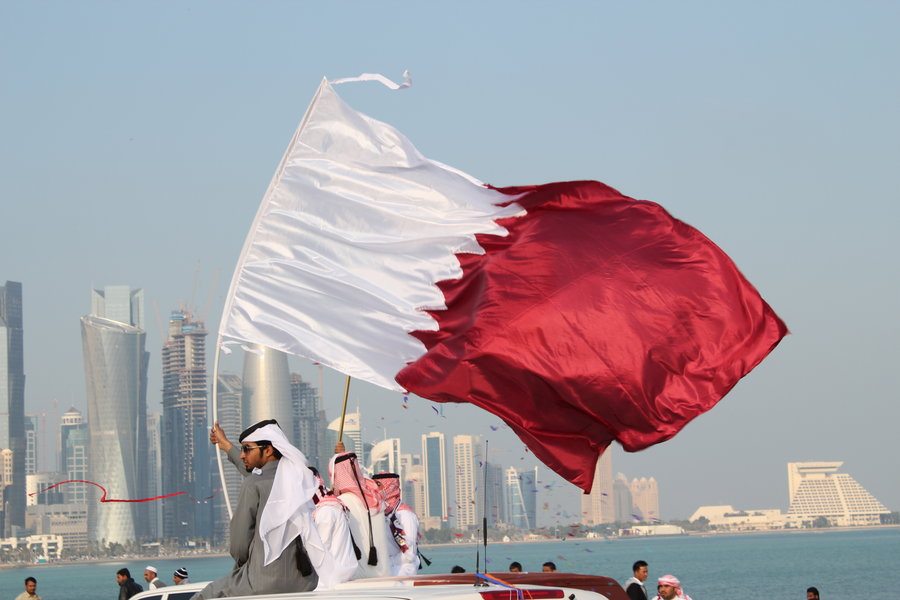
Qatar shares tumble as Turkey’s currency crisis alarms investors

scion Industrial engineering

LONDON: Qatar stocks led losses across the Gulf on Sunday as the Turkish currency crisis unsettled investors. Every regional index ended the day in negative territory.

The Doha measure declined by 2.6 percent as investors sold banks with investments in Turkey.

Qatar National Bank (QNB) lost 4.7 percent while Commercial Bank was also down by about 4.1 percent at the close of trade — becoming the worst performing stocks on the bourse on Sunday.

QNB owns Finansbank in Turkey and Commercial Bank has a majority stake in Turkish lender Alternatifbank.

Events playing out in Turkey also have ramifications for the UAE banking sector — especially Emirates NBD, Dubai’s biggest bank, which has agreed to acquire Turkey’s Denizbank from Russia’s state-owned Sberbank in a deal worth about $3.2 billion.

Arqaam Capital said in a research note that the 37 percent drop in the Turkish lira since the announcement gave Emirates NBD an opportunity to reduce the purchase price. The Dubai lender’s stock lost about 1.7 percent.

The pain was not confined to the banking sector, though. Property developers Emaar and Damac, both with investments in Turkey, also finished the session in negative territory.

The Turkish lira plunged last week as US President Donald Trump doubled tariffs on Turkish steel and aluminum imports.

The lira fell 18 percent on Friday to hit a record low.

In Saudi Arabia, the index fell 1.4 percent, below its 100-day average for the first time this year, Reuters reported.

It closed at 8,065 points, the lowest since late May.

Banks were mostly down, led by National Commercial Bank, which fell 3.2 percent on concerns about its exposure to Turkish assets. Al Rajhi Bank dropped 1.3 percent.

The Dubai index lost 1 percent with Air Arabia down 2.9 percent.

The carrier, which in June disclosed an exposure of $336 million to private equity group Abraaj, said in its financial statement for the first half of 2018 that a short-term investment of 275 million dirhams in Abraaj had not been repaid after maturing at the end of June.

The airline has yet to make any provision for the investment because “events are still unfolding,” it said.

Purchasing manager data for Saudi Arabia and the UAE highlighted that firms’ margins remained under pressure despite a large backlog of orders and a strong export sector.

The Emirates NBD Purchasing Managers’ Index (PMI) for the UAE declined to 55.8 in July from 57.1 in June, signalling the slowest rate of growth in the non-oil private sector in three months.

“Both output and new work, while still strong, were softer than in June,” said Khatija Haque, head of MENA research at Emirates NBD. “Notably, new export orders increased at the sharpest rate in three years, as firms reported stronger demand from other GCC countries and Europe.”

The headline Saudi Arabian PMI also eased marginally to 54.9 in July from 55.0 in June.

“The PMI survey showed both output and new orders increased sharply last month, although at a slightly slower rate than in June. However, once again the year-to-date average for both series indicate much softer growth than for the same period in 2017,” added Haque.

Still, employment increased modestly over the month, as did new export orders.

Source:http://www.arabnews.com/node/1355381/business-economy

Virtual currencies not approved in Saudi Arabia, government committee warns

scion industrial engineering

JEDDAH: Saudi Arabia’s special governmental committee for awareness on dealing with unauthorized securities activities in the foreign exchange market (Forex) has warned against transactions and investments using virtual currencies.

The committee, assembled by a royal order, has warned that such transactions could have “negative consequences” on dealers because of the associated risk with such dealings that are “outside the monitoring umbrella within Saudi Arabia.

The committee said such virtual or cryptocurrencies that are traded through the internet, like Bitcoin and similar virtual currencies, are not approved in the Kingdom.

It said “allegations” on websites that promote investments in such currencies on the internet and social media platforms claiming that they are “authorized” by official authorities in the Kingdom are incorrect.

It warned citizens and residents “not to drift” behind Forex activities that exploit the public’s for fast earnings.

Source:http://www.arabnews.com/node/1355246/saudi-arabia

Turkey central bank ready to take ‘all necessary measures’ for stability

scion industrial engineering

ISTANBUL: Turkey’s central bank on Monday announced it was ready to take “all necessary measures” to ensure financial stability after the collapse of the lira, promising to provide banks with liquidity.

“The central bank will closely monitor the market depth and price formations, and take all necessary measures to maintain financial stability, if deemed necessary,” the bank said in a statement, vowing to provide “all the liquidity the banks need.”

The statement came after the Turkish lira hit record lows against the dollar amid a widening diplomatic spat with the United States.

The detention of US pastor Andrew Brunson since October 2016 on terrorism charges has sparked the most severe crisis in ties between the two NATO allies in years.

The central bank announced the series of measures on Monday, a day after Erdogan’s son-in-law Berat Albayrak, who is treasury and finance minister, announced an action plan was in the pipeline.

“In the framework of intraday and overnight standing facilities, the Central Bank will provide all the liquidity the banks need,” the bank said.

The bank also revised reserve requirement ratios for banks, in a move also aimed at staving off any liquidity issues.

It said with the latest revision, approximately 10 billion lira, $6 billion, and $3 billion equivalent of gold liquidity will be provided to the financial system.

The nominally independent central bank has defied pressure to hike interest rates which economists said would curb the fall of the lira.

Erdogan on Saturday called interest rates as “tool of exploitation” that makes the poor poorer and the rich richer.

Source:http://www.arabnews.com/node/1355451/business-economy

Oil prices dip as demand outlook dims

scion industrial engineering

SINGAPORE: Oil prices dipped on Monday as rising trade tensions dented the outlook for fuel demand growth especially in Asia, although US sanctions against Iran still pointed toward tighter supply.

Front-month Brent crude oil futures were at $72.63 per barrel at 0509 GMT, down by 18 cents, or 0.25 percent from their last close.
US West Texas Intermediate (WTI) crude futures were at $67.63 a barrel, unchanged from their last settlement.

Signs of slowing economic growth and lower fuel demand increases, especially in Asia’s large emerging markets are weighing on the oil markets.
Singapore-based brokerage Phillip Futures said on Monday that “trade protectionism and escalating tensions between the world’s largest economies (The United States and China) have cast a looming shadow on global oil demand growth in 2018.”

Hedge funds and other money managers reduced their bullish positions in US crude futures and options in the week ending on Aug. 7, data from the US Commodity Futures Trading Commission showed on Friday.

Beyond the darkening economic outlook, Phillip Futures said hedge funds had reduced bullish bets because of “rising production levels from OPEC and the United States.”

US energy companies last week added the most oil rigs since May, adding 10 rigs to bring the total count to 869, according to the Baker Hughes energy services firm.

That was the highest level of drilling activity since March 2015.
Despite this cautious oil market sentiment, there are drivers that are keeping prices from falling further.

The United States has started implementing new sanctions against Iran, which from November will also target the country’s petroleum sector.
Iran is the third-largest producer among the members of the Organization of the Petroleum Exporting Countries (OPEC).

“With US sanctions on Iran back in place … maintaining global supply might be very challenging,” ANZ bank said on Monday, although it added that “the US is doing its bit to increase production.

Source:http://www.arabnews.com/node/1355481/business-economy

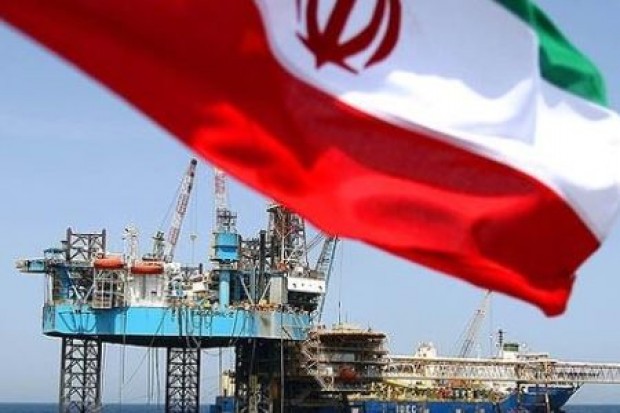
Iran offers discount oil to Asia

scion industrial engineering

TEHRAN: Iran is selling oil and gas at a discount to Asian customers as it prepares for the return of US sanctions, state news agency IRNA reported on Monday.

The “informed source” in Iran’s oil ministry did not give details of the discount but sought to downplay the move as common industry practice.
“Discount is part of the nature of the global markets being offered by all oil exporters,” the source told IRNA.

Bloomberg reported on Friday that the state-run National Iranian Oil Company was reducing official prices for September sales to Asia to their lowest level in 14 years, compared with Saudi crude.

The United States will seek to block Iran’s international oil sales from November 5, when the second phase of sanctions are reimposed as part of Washington’s withdrawal from the 2015 nuclear deal.

Several key buyers, including China and India, who account for roughly half of Iran’s sales, have said they are not willing to make significant cuts to their energy purchases from Iran.

But analysts predict Iran could still see its oil sales drop by around 700,000 barrels per day from their current level of around 2.3 million.
Much will depend on the European Union, which has vowed to resist US sanctions on Iran, but whose companies and financial institutions are more vulnerable to US financial pressure than their Asian counterparts.

French energy giant Total has already said it is pulling out of its multi-billion-dollar investment project in the South Pars oil field in southern Iran as a result of the renewed sanctions.

Source:http://www.arabnews.com/node/1355571/business-economy

Iran launches secondary currency market

scion Industrial engineering

Iran has officially launched a secondary currency market which it hopes would help ease tensions around the prices of the US dollar.

Iran’s top banker says a secondary currency market meant to ease tensions around the prices of the US dollar has started to work.

Valiollah Seif, the governor of the Central Bank of Iran (CBI), said the second currency market would enable “minor importers” to buy their required dollars from exporters of certain non-oil products.

Seif emphasized that the price of the dollar would be set according to the supply and demand balance in the market.

He added that the CBI would allow 20 percent of dollars provided from exports of certain non-oil products excluding petrochemicals, steel and colored minerals to be sold to importers in the secondary currency market at rates mutually agreed by exporters and importers.

The Iranian rial plunged to a record low against the US dollar on the unofficial market last Sunday.

The dollar was being offered for as much as 87,000 rials, compared to around 75,500 on the previous Thursday.

In April, the rial also plunged to its lowest level against the dollar in the free market.

This forced Iran’s police to shut down several currency exchange shops and arrest a number of money changers after what was seen as a serious turmoil in exchange rates.

They intervened after the plunge of the rial which dropped to around 45,000 against the US dollar from 37,700 in mid-2017.

Commercial bankers at the time linked the rial’s slide partly to seasonal demand for US dollars, which rises around the end of the Persian year (March 21) when many Iranians travel abroad.

However, some maintained that US President Donald Trump’s hostile rhetoric, including his threat to reinstate previous sanctions on Iran, had been effective in the deterioration of the rial’s depreciation.

In May, Trump announced that he would pull America out of a 2015 nuclear agreement with Iran and re-impose the sanctions that the deal had envisaged to be lifted.

He has already emphasized that the sanctions which would be imposed on Iran would be “at the highest level”.

The sanctions would include a universal ban on Iran over buying or acquiring US dollars as well as restrictions over purchases of crude oil from the country and investing in its oil sector projects.

Source:http://www.payvand.com/news/18/jul/1014.html

E3 agree to establish dollarless trade with Iran: Russia’s Foreign Minister

Russia’s Foreign Minister Sergey Lavrov told the Russian media that France, Germany and UK have agreed to continue trade with Iran without using US dollar.

Major European countries party to nuclear negotiations with Iran – France, Germany and the UK – have agreed to maintain trade with Tehran independent from the US dollar, said Russia’s Foreign Minister Sergey Lavrov, according to Russian news outlet rt.com.

European companies are under increasing pressure from the US to cut business ties with Iran. Since the majority of transactions are currently conducted using the US dollar, firms working in Iran face potential US penalties.

According to Lavrov, the decision particularly concerns small and medium-sized companies. He explained that the participants in the Iranian deal have agreed to work out measures to protect the countries’ businesses from US sanctions.

“Everyone agrees that this [US sanctions – Ed.] is an absolutely illegal and unacceptable policy, but, of course, this can hardly be changed and there will be enough struggle in trade, economic and political spheres,” the Russian foreign minister said.

Last week, EU lawmakers gave approval for the European Investment Bank (EIB) to do business in Iran in an attempt to save the 2015 nuclear deal.

“We are granting the EIB the capacity to invest in Iran if suitable projects are found,” said Siegfried Muresan, a lawmaker from the center-right European People’s Party.

“The Iran deal is good for Europe’s security,” he told Reuters, referring to the accord signed by world powers in 2015.

The US withdrew from the deal on May 8. US sanctions will snap back in two parts, with a first round returning in August, and with the harshest sanctions returning in early November.

Source:http://www.payvand.com/news/18/jul/1029.html

Relative calm seen in Iran’s currency market

scion engineering pvt. ltd.

Serious signs have appeared in Iran that show the country’s volatile foreign currency market is already heading toward stability. According to media reports, the US dollar was today traded at Rials 78,300 in Tehran indicating a decline of around 4 percent compared to last Wednesday’s figure of Rials 81,000. The greenback was nonetheless higher by 8 percent than what it was traded in the capital four weeks ago at Rials 72,500.

On July 1, the Iranian Rial plunged to a record low against the US dollar on the unofficial market.

The dollar was being offered for as much as Rials 87,000, compared to around Rials 75,500 only a few days prior.

In April, the Rial also plunged to its lowest level against the dollar in the free market.

This forced Iran’s police to shut down several currency exchange shops and arrest a number of money changers after what was seen as a serious turmoil in exchange rates.

They intervened after the plunge of the Rial which dropped to around 45,000 against the US dollar from 37,700 in mid-2017.

Commercial bankers at the time linked the Rial’s slide partly to seasonal demand for US dollars, which rises around the end of the Persian year (March 21) when many Iranians travel abroad.

However, some maintained that US President Donald Trump’s hostile rhetoric, including his threat to reinstate previous sanctions on Iran, had been effective in the deterioration of the Rial’s depreciation.

In May, Trump announced that he would pull America out of a 2015 nuclear agreement with Iran and re-impose the sanctions that the deal had envisaged to be lifted.

He has already emphasized that the sanctions which would be imposed on Iran would be “at the highest level”.

The sanctions would include a universal ban on Iran over buying or acquiring US dollars as well as restrictions over purchases of crude oil from the country and investing in its oil sector projects.

Source:http://www.payvand.com/news/18/jul/1042.html

New Oman retail destination set for Sept 2020 opening

scion Industrial Engineering

Oman’s first outlet mall and largest retailtainment destination – Al Araimi Walk in Barka – is set to open in September 2020, Al Raid Group has announced.

The 240,000 sq m development project will feature 164 retail outlets, 42 food and beverage outlets, seven entertainment hubs, a hypermarket, and IMAX cinema.

It will also include an indoor waterpark, trampoline park, snow village, ice-skating rink, virtual reality zone, and cliff climbing adventure facility, the company said in a statement.

Construction on Al Araimi Walk is scheduled to begin this month and the property will open its doors by September 2020, it added.

Raid Abdullah Al Araimi, vice chairman, Al Raid Group said: “Having a sprawling tree-lined promenade, a high-tech digital park, gourmet restaurants, world-class designer brands and a lot more; each and every aspect of Al Araimi Walk will exemplify and reflect the essence of refined taste, and the innovative spirit of the Al Raid Group.”

He added: “Through the launch of Al Araimi Walk it is our endeavour to become the nation’s number one destination for families, tourists and shoppers.”

Last month, Al Raid Group said its Al Araimi Boulevard project is set to open later this year. The mall in Seeb is “well underway” and will be completed in time for a September opening.

With 70,500 sq m of space to be leased out, Al Araimi Boulevard will accommodate the “finest collection of labels from around the world”.

Source:https://www.arabianbusiness.com/retail/400025-new-oman-retail-destination-set-for-sept-2020-opening