Women drivers will boost petrol demand, says Saudi oil minister

scion

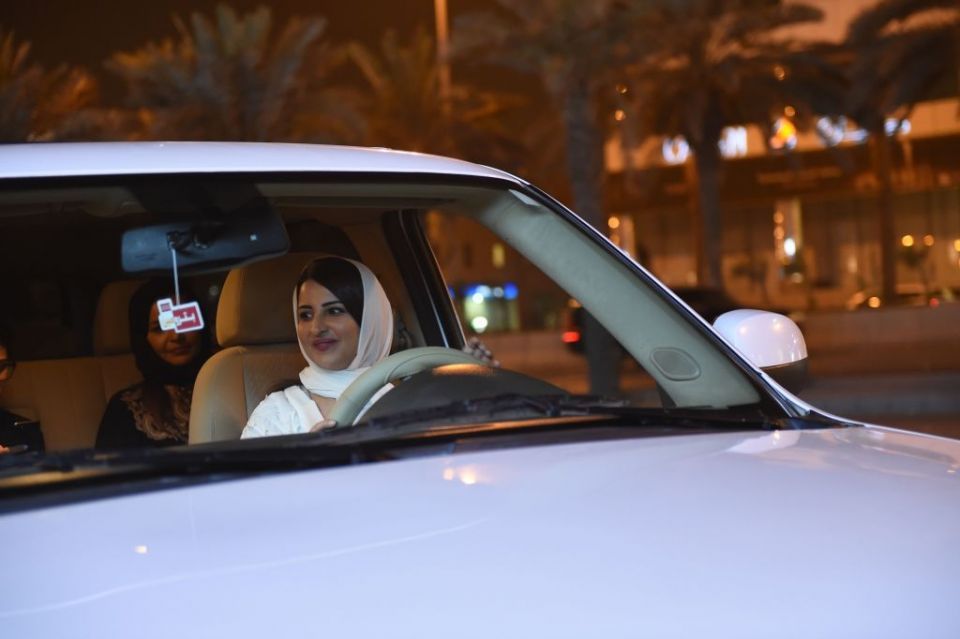
Saudi oil minister Khalid Al-Falih said he was looking forward to his daughters being able to drive

The end of Saudi Arabia’s driving ban for women will have an impact on the economy and gasoline consumption, the energy minister said.

On Sunday the kingdom ending its status as the only country in the world to ban half the population from getting behind the wheel.

“There will be more cars on the road,” Khalid Al-Falih said in Vienna, where he was attending an OPEC meeting.

“Women will be more empowered and more mobile and I think they will participate more in the job market over time, so I think it’s going to contribute to employment of females in Saudi Arabia. A secondary effect will probably be higher gasoline demand.”

The plan to allow women to drive is one of the most dramatic move in the government’s bid to open up Saudi society and modernise the economy. Yet at the same time, the government has jailed some women who campaigned to drive for years.

Saudi Arabia adheres to an austere version of Islam and has curbs on women, barring them from driving and requiring them to have the permission of a male guardian to marry or travel abroad.

When asked if he was looking forward to his daughters being able to drive, Al-Falih said, “absolutely.”

Source:http://www.arabianbusiness.com/politics-economics/399278-women-drivers-will-boost-petrol-demand-says-saudi-oil-minister

End of driving ban to boost Saudi women’s economic role

scion

Saudi women are severely under-represented in the jobs market, with a staggering 31 percent unemployment rate among the female workforce

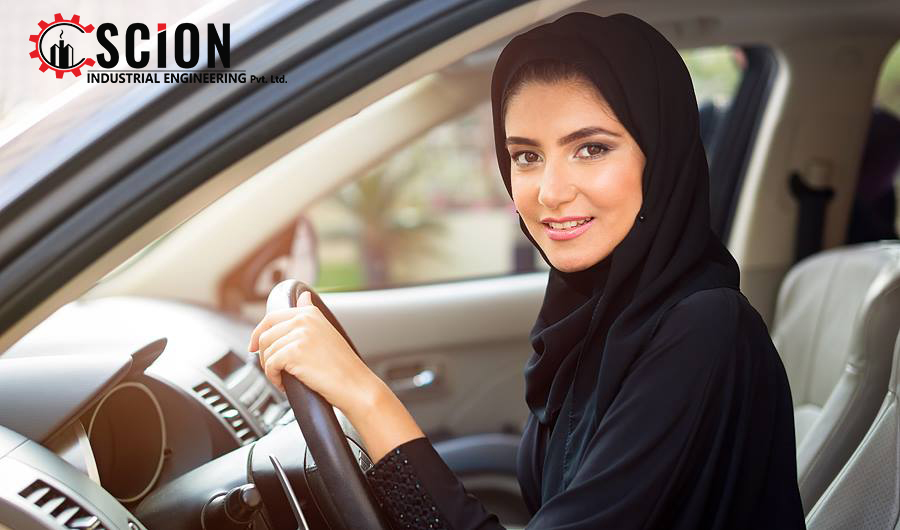
The end of a decades-old female driving ban is expected to bring an economic windfall for millions of Saudi women, making it easier for them to work and do business.

Taghreed Ghazala, who owns a chain of beauty salons, sees the move as a huge step forward for businesswomen like her in the ultra-conservative kingdom.

“I have many drivers that I pay to transport my employees around,” she told AFP.

“Now I don’t need them anymore. My business will save money, effort and time and I can invest them to grow my business faster.”

Saudi women are severely under-represented in the jobs market, with a staggering 31 percent unemployment rate among the female workforce.

They make up just under 23 percent of the national workforce of six million, according to official figures — mainly because of their restricted mobility.

A recent survey by the Chamber of Commerce of the Red Sea city of Jeddah showed that transportation was considered one of the top barriers holding Saudi women back from joining the labour market.

Experts expect that the lifting of the driving ban will not only help raise female participation and employment rates but also create new jobs.

‘More than just jobs’
“I believe the decision will do more than just provide more job opportunities for women,” said Ihsan Bu-Hulaiga, head of the Riyadh-based Joatha Business Development Consultants.

“It will also boost the female economic participation rate and cut the overall national jobless rate because most of the unemployed are women and many of them are university graduates,” Bu-Hulaiga told AFP.

Saudi Arabia’s “Vision 2030” reform programme, the brainchild of Crown Prince Mohammed bin Salman aimed at weaning the kingdom off its dependence on oil, seeks to boost women’s representation in the Saudi workforce to 30 percent by 2030.

Allowing women to drive is also expected to sharply boost both car and insurance sales but is likely to reduce the number of expatriates and increase traffic jams and demand for energy, analysts said.

Dubai-based PWC Middle East Consultancy estimates that by 2020, the number of Saudi female drivers will reach three million, in addition to Saudi Arabia’s 9.5 million male drivers.

The kingdom has a population of 32 million people, including 12 million expatriates, according to official figures.

Car sales are expected to grow by nine percent annually until 2025 as more women get behind the wheel, compared to three percent annual growth in the past four years, PWC said.

‘Transformative’
The decision will also result in less spending on male drivers hired to chauffeur women — and potentially leave foreigners employed in those positions without work.

“The decision will reduce the number of expatriate private (family) drivers which will positively impact the Saudi family budgets regarding drivers wages, housing and health insurance,” Fadhl al-Buainain, a Saudi financial and banking consultant, told AFP.

The move will also have an immediate impact on the daily lives of Saudi Arabia’s working women.

For more than 15 years, Raghda Bakhorji used to wait every morning for a driver to pick her up, and take her to the King Abdulaziz Center for World Culture in Dharan, where she works as a coordinator for an outreach program.

“Being able to drive will be a transformative experience to my routine and lifestyle in general,” says the young career woman.

“In my case, driving will also probably let me save around 3,000 riyals ($800), on a monthly basis”, she told AFP.

Buainain, the consultant, said transportation costs consumed almost a quarter of employed women’s earnings.

Saudi Arabia spends more than 25 billion riyals ($6.7 billion) on the annual salaries of around 1.38 million foreign private drivers, according to official figures.

In addition there are expenses for their entry and residence permits, housing and healthcare.

But the decision could also have some negative impacts such as traffic jams caused by an increase in the number of vehicles on the roads, said Buainain.

In February, the energy-dependent kingdom allowed women to open their own businesses without the consent of a husband or male relative, in a bid to expand a fast-growing private sector.

Source :http://www.arabianbusiness.com/culture-society/399275-end-of-driving-ban-to-boost-saudi-womens-economic-role

Saudi women driving set to boost economy more than Aramco IPO

scion

Allowing Saudi women to drive could add as much as $90 billion to economic output by 2030
Allowing Saudi women to drive could help the kingdom reap as much income as selling shares in Saudi Aramco.

The move, which went into effect on Sunday, could add as much as $90 billion to economic output by 2030, with the benefits extending beyond that date, according to Bloomberg Economics.

Selling as much as 5 percent stake in Saudi Arabian Oil Co. – at the most optimistic valuation – could generate about $100 billion.

Saudi Arabia ended its status as the last country on earth to prohibit women from taking to the wheel.

A handful of women drove through the still-packed streets of the capital early Sunday while others drove in convoys around Riyadh neighbourhoods in celebration of the ban’s end. The decision would enable women to work without having to incur the cost of a driver or taxis.

“Lifting the ban on driving is likely to increase the number of women seeking jobs, boosting the size of the workforce and lifting overall incomes and output,” according to Ziad Daoud, Dubai-based chief Middle East economist for Bloomberg Economics.

“But it’ll take time before these gains are realised as the economy adapts to absorbing growing number of women seeking work.”

Ending the ban is one of the most socially-consequential reforms implemented by Saudi Arabia’s Crown Prince Mohammed bin Salman. It’s also a key part of his plan to veer the economy from its reliance on oil.

“The participation of women in Saudi Arabia’s labour market is poor. With only 20% of females in Saudi Arabia economically active, the country even lags behind its neighbours in the Gulf, where participation averaged 42% in 2016,” said Daoud.

“Recognising this, the Saudi administration made raising the female participation rate one of its main targets in the National Vision 2030 program, designed to modernise Saudi society.”

Adding 1 percentage point to the Saudi participation rate every year might add about 70,000 more women a year to the labour market, according to Daoud.

The larger participation of women will lift potential economic growth by as much as 0.9 percentage points a year, “depending on the proportion that chooses to work full or part-time,” he said.

Source:http://www.arabianbusiness.com/politics-economics/399298-saudi-women-driving-set-to-boost-economy-more-than-aramco-ipo

Mubadala unit acquires 10% stake in offshore Egyptian gas field

scion

Mubadala Petroleum has announced that it has completed the acquisition from Italy’s Eni of a 10 percent interest in the offshore Shorouk concession in Egypt, which contains the giant Zohr gas field.

Following the completion, Eni, through its subsidiary IEOC, holds a 50 percent interest in the concession. The other partners in the concession are BP with 10 percent interest and Rosneft with 30 percent interest.

The Zohr field was discovered by Eni in August 2015 and is the largest natural gas field ever found in the Mediterranean, with a total potential of up to 30 trillion cubic feet of gas in place.

The field is currently producing over 1.1 billion cubic feet of gas per day (bcfd), equivalent to approximately 200,000 barrels of oil equivalent per day. Production is expected to increase to 2 bcfd by end 2018 and to reach a production plateau of 2.7 bcfd by end 2019.

Dr Bakheet Al Katheeri, CEO, Mubadala Petroleum, said: “The acquisition of a 10 percent interest in the Shorouk concession with the producing Zohr gas field is a significant portfolio addition for Mubadala Petroleum and marks our entry into Egypt.

“This world-class asset will provide Mubadala Petroleum with increasing future production, and substantial reserves, all of which support our drive for long-term and profitable growth. At the same time we have joined a world-class partnership with Eni and look forward to working closely with them to deliver the resources to meet growing local energy demand.”

Eni’s CEO, Claudio Descalzi, added: “We welcome today’s announcement with Mubadala Petroleum, a strong and reliable partner with whom we look forward to working with. Working alongside significant partners such as Mubadala Petroleum, BP and Rosneft is a further boost for the development of Zohr and underlines the quality of the asset, which will play a fundamental role in supporting Egypt’s goal of achieving energy independence.”

Source:http://www.arabianbusiness.com/energy/399126-mubadala-unit-acquires-10-stake-in-offshore-egyptian-gas-field

Emirati tycoon launches $27m education fund for refugees

scion

Abdul Aziz Al Ghurair, Emirati businessman and philanthropist, has announced the establishment of a AED100 million ($27.2 million) education fund for refugees.

On the occasion of World Refugee Day, he said the Abdul Aziz Al Ghurair Refugee Education Fund will benefit refugee youths affected by wars and disasters residing in the UAE.

The initiative will run for three years and will support the education of a minimum of 5,000 children, a statement said.

The move comes as international funding for refugee education has not been able to keep up with the vast need in the largest host countries.

Al Ghurair said: “I established this fund during the Year of Zayed because I believe that philanthropists have a role in helping to support one of the most acute challenges of our region: lack of education opportunities for young people who need it the most. Young people whose education has been interrupted by conflict deserve a chance to rebuild their lives and have a shot at a good future.”

The Abdul Aziz Al Ghurair Refugee Education Fund will support high-impact education programs at the secondary, vocational and tertiary levels of education for refugee youth in Jordan and Lebanon.

Source:http://www.arabianbusiness.com/education/399114-emirati-tycoon-launches-27m-education-fund-for-refugees

Dubai airport unveils high-tech installation

scion

New state-of-the-art feature allows transit passengers to explore the city without stepping outside terminal

Dubai: Travellers making a quick stopover in Dubai International can now explore the emirate without having to step outside the airport.
A new state-of-the-art kiosk, dubbed “MyDubai Experience,” has just been set up in Terminal 3, Concourse A to allow flyers who are just passing through to virtually discover Dubai and inspire them to make a visit in the city.

Dubai International is a major hub for global travel, accommodating 90 million flyers in 2017 alone, making it the world’s busiest airport for international travellers.
Dubai, whose top three source markets are India, Saudi Arabia and the United Kingdom, is nearing its 2020 tourism target, with the number of people visiting the emirate in 2017 reaching 15.79 million, up by 6.2 per cent over a year earlier. The newly installed feature is designed to boost these tourist numbers further.

Designed to catch the attention of a transient flyer, the kiosk features LED tiles positioned to create five 360-degree rings, each showing photos, videos, social media and user-generated content that has been curated.
“The rings can either work together to produce a single large visual, or operate independently to create a collage depicting a multitude of different Dubai experiences and offerings,” a statement reads.

Just below the rings are seven 55-inch curved OLED screens and seven 22-inch touchscreens. With the touchscreens, travellers can now have an immersive virtual travel experience and access information about Dubai, including the city’s attractions, landmarks, activities, experiences, itineraries and maps.

And what’s more, the installation can create a tailor-made two-day itinerary in Dubai based on the passenger’s interests and preferred experiences, making it easier for any potential visitor to plan their stopover.
The project has been launched by Dubai’s Department of Tourism and Commerce Marketing (Dubai Tourism), in collaboration with Dubai Airports and Emirates Airline.

Source:https://gulfnews.com/news/uae/tourism/dubai-airport-unveils-high-tech-installation-1.2238472

The rise and fall of Abraaj, the region’s largest private equity firm

scion

Dubai: The past four months have seen a steady trickle of news that has broken in to a full flood of revelations in recent weeks, concerning Abraaj Group’s funds, and allegations of poor corporate governance.
Last Thursday, the former golden child of the regional private equity scene filed for provisional liquidation in the Cayman Islands, as it seeks to execute a $1 billion debt restructuring.

On today’s podcast, we try to decipher how Abraaj reached this point, and we talk about where things go from here.
With the company filing for liquidation, creditors and investors are scrambling to retrieve their money, including publicly traded companies such as Air Arabia.
Many are asking how, and when, these firms will get their money back, and what will be done in the future to prevent this kind of thing happening again.

Visionary of the Year: What makes Bin Faqeeh stand out in 2018?

scion

Considered as one of the biggest real estate markets in the Gulf intense Cooperation Council (GCC) countries, the real estate market of the Kingdom of Bahrain is also one of the region’s most competitive markets. And while there are several renowned developers working to make out the best of the island kingdom’s potential, Bin Faqeeh Foundation has been standing out as one of the most unique real estate development companies there.

Ever since its launch in 2008 less than 10 years ago, Bin Faqeeh’s brand has reserved itself as one of the best players of the real estate sector in Bahrain. This status can be attributed to multiple reasons, the most important of which being are the developer’s creativity that was demonstrated in the projects and concepts it has worked on as well as the fact that the developer mainly aimed at acquiring a share in the prosperous market of the Bahraini Freehold Areas.

Achievements of 2018:

Last year, our team at Weetas has conducted an interview with Faysal Faqeeh, the founder and CEO of Bin Faqeeh organization, around the current status quo of the real estate market of the Kingdom of Bahrain. Faqeeh has demonstrated his positive personal predications not only through his answers to our questions, but also through the activities of his foundation during the first four months of the current year.

As a result of that, Bin Faqeeh – both the foundation of the man – won multiple deserved awards. During MEED awards, Bin Faqeeh has won the Real Estate Developer of the Year award and the National Residential Project of the Year for The Treasure project. In addition to that, Faisal Faqeeh won the Visionary of the Year award during Arabian Business Real Estate awards.

Previous Projects:

Bin Faqeeh has maintained for itself a portfolio of successful projects that included Layan, the residential development located in Durrat Marina which has won itself the Best Residential Project in Bahrain in Arabian Real Estate Awards in 2016 which includes studios, duplexes, one-bedroom, two-bedroom, and three-bedroom apartments, and The Tweet, a 21-storey residential tower located in Seef District that comprises 135 one-bedroom luxurious apartments.

Bin Faqeeh has launched 28 projects so far, 12 of which have been successfully delivered, 4 of which have been delivered ahead of schedule.

Future Projects

The aforementioned awards only add to the many prestigious honors that Bin Faqeeh has won before; it also reflects the organization’s commitment to delivering excellence and creativity through its projects. With that in mind, let’s take a look upon the most highlighted current projects of Bin Faqeeh in the Kingdom of Bahrain:

The Treasure:

Being the winner of MEED’s National Residential Project of the Year award, The Treasure has gained a lot of attention and has been under the spotlight for a while now.

Situated within the heart of the famous Dilmunia Island, The Treasure has a lot of compelling features for the local and international real estate investors. We need to mention here that Dilmunia Island is currently being developed and renovated to be a major healthcare resort and one of the key attractions of the GCC regions for the wellness tourism.

The healthcare city that is being developed over an area that spans more than 165,000 square meters on the island right now is planned to comprise the state-of-the-art equipment and the most advanced medical technologies to be operated by the finest calibers in the healthcare field.

The Treasure is not only situated within a close distance from the healthcare city, it is also close to the island’s airport. In addition to that, the project’s high-end residential units – which will vary between one-bedroom apartments, two-bedroom apartments, three-bedroom apartments, and penthouses – will offer its residents a mesmerizing view of the gulf waters.

In addition to that, the project will also comprise luxurious entertainment facilities that include an outdoors swimming pool, a gym, a private cinema, and a gaming area.

Waterbay West Project:

This is probably the finest example that reflects the foundation’s creativity and willingness to bring brand new concepts not only into the Bahraini market, but also to the whole GCC.

In partnership with Paramount Residences, Bin Faqeeh has unveiled the new Waterbay West project last month; the project, which is planned to be open within the second quarter of 2019, is aiming at bringing about the Hollywood Lifestyle through three towers that consist of 10 stories.

Upon its announcement during an event which was attended by Shaikh Khalid bin Humood Al Khalifa, the chief executive of Bahrain Tourism and Exhibtion Authority (BTEA), as well as Steven Seagal, the famous American actor and producer and Ghassan Aridi, the chairman of Paramount Hotels and Resorts.

According to Bin Faqeeh, this project is considered a challenge for the foundation as they are trying to open the project as soon as possible since Dubai, the top tourism destination in the region, does not have any projects of the same type yet and Riyadh, the capital of the Kingdom of Saudi Arabia, has one that is still not open yet.

Bin Faqeeh also explained that the design and the concept of the trio of towers will be brand new to the architectural landscape of the Kingdom of Bahrain. The first tower will feature 180 apartments, while the second will feature 200 and the third will feature 189 units.

Al Sidra:

Situated at the heart of Diyar Al Muharraq island, Al Sidra’s strategic location grants its residents almost an instant access to some of the top attractions like Marassi Beach, Amwaj Island and Dragon City.

The project is also 15 minutes away from Bahrain International Airport.

In addition to the unique and variant design styles of the residential units, the project will offer multiple luxurious amenities that include the stunning Flamingo Park, the public beaches and the connected waterways.

All of these promising features and upcoming projects reflect the unique brand Bin Faqeeh Foundation has established for itself through the past decade. It is safe to say that such projects will help the Bahraini real estate market to grow more robust as one of the top attractions of investments and tourism in the GCC.
NEOM:Saudi Arabia’s Vision 2030

ssrd

In the Kingdom of Saudi Arabia, the Crown Prince Mohammed bin Salman has been pushing for economic and cultural reforms with his plan called the ‘Vision 2030’ for Saudi Arabia.

On the 24th of October, the Crown Prince announced plans to build a brand new mega-city on the Red Sea coast. The announcement came at an international business conference in Riyadh, which drew over 3,500 people from 88 countries.

The Prince announced the city project, “NEOM” and with it the news that the mega-city will be operating completely independently from the current governmental framework and regulations of Saudi Arabia. NEOM is also said to have its own tax and labour laws and an autonomous judicial system.

The Crown Prince while talking about NEOM, held two cellular phones in his hand, one was a decade old and one was a smartphone from 2017, stating that “this represented the difference between what NEOM would be and any other such area in Saudi Arabia”

He also mentioned that the plans for this mega-city would not be passed without consulting big-ticket investors and experts at every step of this project’s development.

The announcement of this plan, took many foreign investors and traders by surprise, even though the Kingdom of Saudi Arabia has been announcing a series of major changes which are being made by the Crown Prince to get Saudi prepared for the post oil-economy.

In another twist, the mega-city project, NEOM is going to be powered completely by clean-energy, including solar and wind. The 32 year old Crown Prince announced that NEOM will “not have room for anything traditional.”

The mega-city project development is estimated to cost over $500 billion, and the ambitious project would include a bridge spanning the Red Sea, connecting the NEOM city to Egypt and the rest of Africa. The total covered area of NEOM is said to be over 29,5000 square kilometres. NEOM is set to stretch into not only Egypt, but also Jordan, as well.

Saudi Arabia’s border with Jordan touches the northern end of the Gulf of Aqaba, near the Israeli city of Eilat. It also sits opposite Egypt, across the Straits of Tiran.

The Kingdom of Saudi Arabia has stated on record that the project will be developed over the years with investments coming from both the treasury of Saudi Arabia, and foreign and local investors.

The mega-city development plan of NEOM, is said to be focused on nine major sectors, including clean energy, water sustainability, biotechnology, advanced manufacturing, entertainment, and food technology with Klaus Kleinfeld, former chairman and CEO of Siemens AG, leading the development.

A statement released by Saudi Arabia, stated “NEOM’s contribution to the kingdom’s GDP is projected to reach at least $100 billion by 2030, in addition to its per capita GDP – projected to become the highest in the world,”

Source:http://www.jordanbusinessmagazine.com/economy/saudi-arabia-plans-build-mega-city-jordan-egypt

Protecting European Companies in Iran

The European Union is taking steps to protect EU companies investing in Iran from renewed American sanctions on Tehran after US President Donald Trump decided to unilaterally withdraw from the Iran nuclear deal late last month.

The European Commission said it has adopted an update of the Blocking Statute and of the European Investment Bank’s External Lending Mandate. The move follows up on the informal Leaders’ Meeting in Sofia, as well as the commission’s announcements of May 18, reads an article published by Brussels-based weekly newspaper New Europe on Monday. Excerpts follow:

“These measures are meant to help protecting the interests of EU companies investing in Iran and to demonstrate the EU’s commitment to the Joint Comprehensive Plan of Action,” the commission said in a press release.

Since the original international sanctions were lifted in January 2016 after the deal on Iran’s nuclear program, Tehran has sought foreign investment to help the Islamic Republic raise its oil production to above 4 million barrels per day by upgrading its eroding infrastructure and help finance new projects in the oil and gas sector.

Iran ranks second in the world in natural gas reserves and fourth in proven crude oil reserves.

“Through the update of the Blocking Statute, the extraterritorial sanctions that the United States will reimpose on Iran are added to its scope, while the update of the EIB’s External Lending Mandate would make Iran eligible for investment activities by the EIB,” the European Commission said on June 6.

The commission noted that this enabling measure does not, however, commit EIB to actually support projects in Iran as it is up to the bank’s governing bodies to decide to take up such financing activities in line with relevant rules and procedures.

Following the adoption on June 6, the European Parliament and the Council will have two months to object to these measures before they enter into force. If no objection is raised, the updated acts will be published and will enter into force at the latest at the beginning of August, by the time the first batch of reimposed US sanctions will take effect, the commission said.

“The European Union is fully committed to the continued, full and effective implementation of the JCPOA, so long as Iran also respects its obligations. At the same time, the European Union is also committed to maintaining cooperation with the United States, who remains a key partner and ally,” the commission said.

On May 8, Trump announced the United States’ decision to withdraw from JCPOA and to reinstate the US sanctions that were in force before JCPOA’s implementation, subject to certain wind-down periods.

Security Interests

According to the New York Times, in a letter sent on June 4 to US Treasury Secretary Steven Mnuchin and Secretary of State Mike Pompeo, EU leaders cited “security interests” in requesting that companies in Europe be granted an exemption from renewed US sanctions against Iran.

“In their current state, US secondary sanctions could prevent the European Union from continuing meaningful sanctions relief to Iran,” said the letter, signed by the finance and foreign ministers of Britain, France, and Germany and EU foreign policy chief, Federica Mogherini. Without that sanctions relief, Iran has threatened to pull out of the deal. That “would further unsettle a region where additional conflicts would be disastrous”, the letter read, cited by NYT. The agreement was “the best means through which we can prevent a nuclear-armed Iran” and there are “no credible alternatives at this time”.

The EU has criticized Trump’s decision to pull out of the Iran deal and have tried to work with the US State Department to find a solution for the European companies working in Iran.

Total Withdrawal

French oil major Total announced in a press release on May 16 that it would not be in a position to continue Iran’s South Pars 11 (SP11) gas development project unless Total is granted a specific project waiver by the US authorities.

Total pointed to the fact that on July 4, 2017, together with the other partner Petrochina, it executed a contract related to the SP11 project in full compliance with United Nations resolutions and US, EU and French legislation applicable at the time.

SP11 is a gas development project dedicated to the supply of domestic gas to the domestic Iranian market.

Given the announcement of new US sanctions, Total said it will not be in a position to continue the SP11 project and would have to unwind all related operations before November 4 unless Total is granted a specific project waiver by the US authorities with the support of the French and European authorities. This project waiver should include protection of Total from any secondary sanction as per US legislation.

Total cannot afford to be exposed to any secondary sanctions as US banks are involved in more than 90% of Total’s financing operations, US shareholders represent more than 30% of Total’s shareholding and US assets represent more than $10 billion of capital employed.

Total, which confirmed that its actual spending to date with respect to the SP11 contract is less than €40 million in group share, urged the French and US authorities to examine the possibility of a project waiver.

Source:https://financialtribune.com/articles/economy-business-and-markets/87874/protecting-european-companies-in-iran