Oman Air targets Europe, Far East with new Dreamliner

Scion Industrial Engineering

Oman Air has announced it will stick to expansion plans laid before the departure of its CEO earlier in the year, as it inducts a new Boeing 787-9 Dreamliner into its fleet.

The Dreamliner, delivered to the carrier yesterday, is the largest variant of the aircraft, and is configured with 30 business class suites, and 258 economy class seats.

The new aircraft will allow Oman Air to bring its full service experience on high yielding long-haul routes, “in Europe and the Far East,” the carrier said in a statement.

“The delivery of new aircraft is part of Oman Air’s fleet and network expansion,” acting CEO, Eng. Abdulaziz Al Raisi said. “We’re adding new aircraft to keep up with the expansion programme.”

Raisi was named acting chief after Paul Gregorowitsch stepped down as CEO in October.

Before his departure, Gregorowtisch had said the airline was looking to grow its network in Europe as well as expand to destinations in the Far East including Hong Kong.

The carrier expects to receive three more 787-9 Dreamliners in 2018, two of which will be equipped with first class cabins.

Oman Air also has 30 Boeing 737 MAX on order, as part of plans to increase its fleet from 48 to around 70, which will see the carrier operate around 75 destinations by 2023.

Source:https://www.arabianbusiness.com/industries/transport/385142-oman-air-targets-europe-far-east-with-new-dreamliner

DHL AND MAGENTO PARTNER TO HELP ONLINE MERCHANTS IN MENA

scion Industrial Engineering

Deutsche Post DHL Group, the world’s leading logistics company, today announced its collaboration with Magento, the worldwide leader in cloud digital commerce innovation, as Premier Partner for Shipping. The partnership enables DHL and Magento to offer a broad range of shipping services to e-commerce merchants, small and medium enterprises (SMEs), start-ups and online entrepreneurs in the Middle East and North Africa (MENA) region.

A study by Gartner reports that only 15 per cent of businesses in region have an online presence and 90 per cent of online shopping involves product imports from outside the region.

The study findings illustrate the immense growth potential for e-commerce merchants and online retailers in the region. The study further identifies reliable delivery system as one of the key areas e-commerce players should focus on to drive business growth in MENA.

With the shift in trend towards consumer markets and growing use of e-commerce channels by SMEs in the MENA region, we see a tremendous potential in our partnership with Magento. We look forward to providing online merchants on Magento platform with reliable and flexible shipping options to help them deliver exceptional customer experiences,” said Nour Suliman, CEO, DHL Express Middle East and North Africa.

“Magento connects merchants and shoppers. DHL connects shoppers with their goods,” said John Pearson, CEO Europe and Global Head of Commercial, DHL Express. “Our collaboration will provide Magento merchants with industry-leading international shipping and value-added shipping features from DHL that easily and flexibly connect shoppers with their goods.”

Accepting the Magento partnership emphasizes again Deutsche Post DHL Group’s intention to be the leading global provider in e-commerce logistics. The Group’s divisions together comprise the most international company in the world, present in 220 countries and territories, allowing online merchants to leverage the Group’s unsurpassed global reach to execute their e-commerce strategy.

Online retailers connected with the Magento platform will be able to select from a range of DHL shipping services, with the partnership expected to expand over time to include an increasing portfolio of parcel, express, freight and other logistics services provided by the different DHL divisions.

“Commerce is no longer just about the “buy button” and our merchants are looking to meet their customers when and wherever they want to engage, buy, and receive their purchases,” said Mark Lenhard, Senior Vice President of Strategy and Growth at Magento Commerce. “By partnering with DHL, our joint merchants will be able to offer improved customer experiences and grow their business by providing their customers with the fast, convenient shipping options they expect.”

As a Premier Partner, DHL will connect with merchants through strategic placement on Magento properties and the core product merchant administration panel. In addition, DHL will have the opportunity to educate merchants on shipping integration best practices and how to increase cross-border shipping via the Magento Community online, webinars, thought leadership pieces, events including Imagine and MagentoLive, and in one-to-one meetings. DHL will also have early access to Magento product roadmaps so as to improve integrations and the merchant experience.

“We’re particularly excited about the potential of Magento Shipping, and will integrate our most advanced shipping solutions there,” said John Pearson. “Deutsche Post DHL Group has a history of working with leading technology partners like Magento. We will maintain our global leadership position only by innovating and adopting new technologies. Magento is at the leading edge of e-commerce technology, and DHL is the global logistics leader. Our association is sure to benefit both organizations – most importantly our e-commerce customers.”

Magento’s Premier designation recognizes global leaders and brings close collaboration in key categories of interest to e-commerce merchants to deliver exceptional, end-to-end customer experiences.

Source:https://www.muscatdaily.com/Archive/Business/DHL-and-Magento-partner-to-help-online-merchants-in-Mena-59n0

EOR TO CONTRIBUTE FOR 23% OF PDO’S TOTAL OIL OUTPUT BY 2025

scion industrial engineering

Enhanced oil recovery (EOR), a process used to extract crude from ageing oil fields, could account for nearly a quarter of the overall production of Petroleum Development Oman (PDO) in next seven years.

EOR currently accounts for around ten per cent of PDO’s total production. Many of Oman’s oil fields are ageing and that could mean decline in production in the coming years, but with the help of EOR, which includes injecting steam, chemicals or other materials in the ground, the company plans to boost production.

‘Despite the challenging economic environment, PDO is continuing its journey in growing the future EOR contribution to oil production. It is anticipated that by 2025 more than 23 per cent of PDO’s production will come from EOR projects’, PDO said in its sustainability report released recently.

PDO is currently operating a range of commercial-scale EOR projects including chemical EOR, miscible gas injection and thermal applications. Concurrently, PDO is continuing to identify novel EOR technologies that have the potential to unlock difficult hydrocarbon resources. This is being done through a series of dedicated laboratory and field testing programmes, the report said.

PDO’s fact file also revealed that the company’s overall production in 2017 stood at 1.13mn barrels of oil equivalents per day, marginally lower than previous year as it cut production to comply with the sultanate’s commitment to OPEC’s agreement.

PDO’s average production of crude oil stood at 582,196 barrels per day (bpd), which is around 14,000bpd above the target for the last year while its gas production stood at 74.64mn cubic meters per day in 2017.

PDO has said that the decline in production was mainly due to Oman’s compliance with the production cut agreement between OPEC and non-OPEC producers.

Besides, PDO has taken various steps to curb expenditure and improve efficiency. These measures have helped it save over around US$390mn in oil and gas capital expenditure in 2017. Moreover, the company also took steps to renegotiate contracts which are likely to result in cost saving of around US$180mn over the next three to four years.

Source:https://www.muscatdaily.com/Archive/Business/EOR-to-contribute-for-23-of-PDO-s-total-oil-output-by-2025-59og

‘New era’ Gulf carriers look to join aviation alliances

Scion Industrial Engineering

Two of the Gulf’s resurgent carriers have said they are looking at the possibility of cooperation with other airlines including joining alliances in an attempt to stem losses and reinvent their business models.

In an interview with Abu Dhabi daily The National last week, Etihad Aviation Group CEO Tony Douglas, who took over in January, said the airline could be looking at building closer ties with airlines within the Star Alliance network.

“In the past, the Etihad Group was identified as being an alliance itself and, consequently, under the rules of Star Alliance, its members were not allowed to engage in collaboration with us on codeshares,” Douglas was quoted as saying.

Douglas stopped short of saying anything that would confirm Etihad would be joining the global Star Alliance network just yet.

The airline would depart from “growth for growth’s sake” and instead “look for sustainable growth” including through “partners to build connectivity with their networks through codeshares wherever both parties agree to do so,” he added.

Etihad has sustained losses of nearly $3.5 billion owing to a strategy involving buying stakes in European carriers Alitalia and Airberlin that have since both filed for insolvency.

In a new strategy unveiled last week Douglas said Etihad would now focus on point to point flights that keep its focus on Abu Dhabi. That strategy could see it align itself more closely with carrier’s that were open to codeshare partnerships, possibly similar to its extensive January 2017 codeshare agreement with Star Alliance member Lufthansa.

Etihad’s new direction echoes that of another airline that was once considered the benchmark of aviation experience over the Gulf’s skies.

Gulf Air partnerships
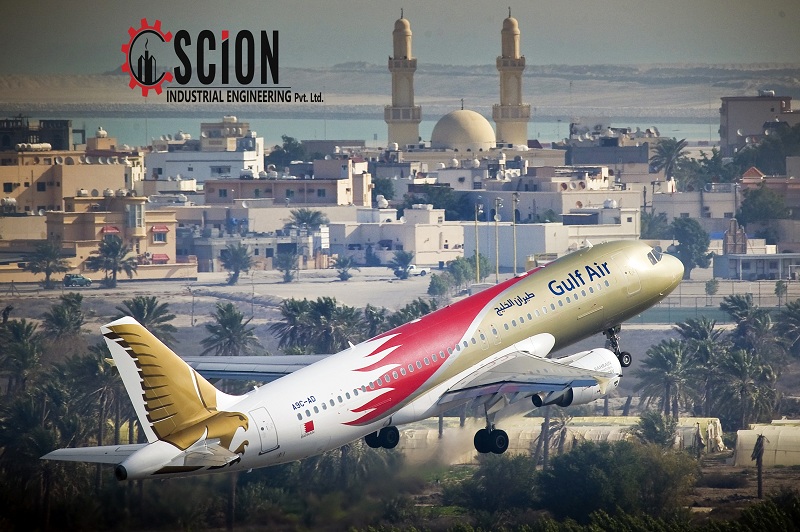
Bahraini carrier Gulf Air’s Krešimir Kučko told reporters on the sidelines of ACI Europe & World general assembly, that the airline’s new forward plans would involve more partnerships.

Appointed in November last year, Kučko is vying to bring Gulf Air back to profitability after years of losses at the carrier and a crisis of leadership that saw the abrupt resignation of its CEO last year.

The airline signed a number of codeshare partnerships with Star Alliance carriers Aegean Airlines and Turkish airlines last year and will likely look to grow those partnerships with other carriers as it increases its scope of operations.

“The national carrier has a future,” he told AIN earlier in the year. “We are evaluating the possibilities and will start the process of approaching the groups at the end of the summer,” he said.

Source: https://www.arabianbusiness.com/transport/400233-new-era-gulf-carriers-look-to-join-aviation-alliances

Saudi unemployment increases despite decline in expat workers

scion Industrial Engineering

Saudi Arabia is moving ahead with plans to curtail its dependence on foreign labour, but the intended benefits haven’t yet trickled down to the country’s own nationals as intended.

Expat jobs declined by 2.3 percent, or 234,191 over the first three months of 2018 to just over 10.18 million, according to results revealed by the country’s General Authority for Statistics.

However, Saudi Arabia’s unemployment rate for nationals over the age of 15 creeped up to 12.9 percent, up from 12.8 percent in the fourth quarter of 2017.

A closer look at the results shows that Saudi Arabia’s male and female workforce participation rates registered increases, now amounting to 63.5 percent and 19.5 percent of each gender’s active and employable population.

Those increases contrast with unemployment rates for each: Saudi women’s unemployment rate decreased during the quarter to 30.9 percent from 31.10 percent in the fourth quarter of 2017; the unemployment rate for Saudi men increased to 7.6 percent during the same period.

Saudi Arabia’s Ministry of Labour and Social Development issued a new decree earlier in the year limiting retail and other operational jobs in 12 different sectors to Saudi nationals.

The country’s Ministry of Civil Service has also announced it wants only nationals to staff roles in its public sector.

The nationalisation initiatives are intended to create over 1 million jobs over the next decade.

But the latest measures from the state of Saudi Arabia’s workforce show that the total number of workers in the Kingdom has actually declined by 247,628 to 13,333,513.

Unemployment across the country, including rates for both nationals and expats, has risen to 6.1 percent in the first quarter of 2018 from six percent in the last quarter of 2017.

Source:https://www.arabianbusiness.com/politics-economics/400163-saudi-unemployment-increases-despite-decline-in-expat-workers

Oman’s long-term outlook makes it attractive for investment

Scion Industrial Engineering

Majid Al Futtaim has created employment opportunities for 42,000 people in the sultanate

Oman has “strong fundamentals” that make it an attractive place for large-scale and modern developments, Majid Al Futtaim CEO Alain Bejjani.

On Wednesday, Majid Al Futtaim and the Oman Tourism Development Company (OMRAN) announced a partnership to develop the western portion of Madinat Al Irfan, the sultanate’s largest urban development project.

The $13 billion joint venture will see the development of a mixed-use community that will include approximately 11,000 residential units, 100,000 square metres of retail space, 700,000 square metres of office space and a number of cultural and lifestyle offerings.

The project’s announcement, however, comes at a time in which Oman’s economy is facing a significant contraction of oil output and negative GDP growth, prompting the International Monetary Fund (IMF) to urge the country to further diversify its economy and work to create more jobs.

Speaking to reporters ahead of the announcement on Wednesday, Bejjani said that the project is a long-term initiative that takes advantage of Oman’s long-term economic outlook.

“Today may not be the best time, but this project is over two decades,” he said. “If you look at population and tourism growth in Oman, the fundamentals are there. We aren’t looking at this project in the context of today, but in the context of Oman’s fundamentals.”

By 2040, Oman plans to attract 5 million visitors for year and employ 500,000 people in the tourism sector.

Peter Walichnowski, the CEO of OMRAN, said that he believes that Madinat Al Irfan would have the added benefit of attracting foreign businesses, particularly those involved in the travel and hospitality industries.

“The signal we’d like to send to the rest of the world is that Oman is open for business, particularly in the tourist business,” he said.

Additionally, in his remarks, Bejjani noted that said Majid Al Futtaim is Oman’s largest non-energy Gulf investor and a long-term contributor to the local economy, having invested over $1.8 million and created employment opportunities for 42,000 people in the country.

Source: https://www.arabianbusiness.com/politics-economics/399628-omans-long-term-outlook-makes-it-attractive-for-investment-says-majid-al-futtaim-ceo

Central Bank increases year-end inflation expectation from 11.07 percent to 12.28

As top vital presidential and deputy elections to be held in Turkey on June 24 approach the administration is continuing to have issues with economy. Most recently The Central Bank of Turkey has increased its year-end inflation expectation from 11.07 percent to 12.28 percent.

Based on a monthly survey conducted by the Central Bank with 96 participants consisting of 75 financial sector, 13 real sector, and 8 professional members the year-end inflation expectation was reported to go up to 12.28 percent from 11.07 percent.

While the current year-end TÜFE (Consumer Prices Index) expectation was 11.07 percent in the previous survey period, it increased to 12.28 percent in this survey period.

The GDP growth expectation for 2018 which was 4.6 percent in the previous survey period went down to 4.2 percent in this survey period.
The year-end dollar exchange rate expectation rose from 4.44 liras in the previous survey period to 4.58 liras in this survey period
The current account deficit forecast for 2018 remained unchanged at 53.5 billion dollars in this survey period.

Source :http://businessturkeytoday.com/central-bank-increases-year-end-inflation-expectation-from-11-07-percent-to-12-28-percent.html

Turkey’s exports exceed $12 billion in June

scion

Indeed, based on figures circulated by official authority the sector has exported goods worth US$ 5.9 billion to nearly 200 countries January 1 – May 31 period and achieved a 20 percent increase compared to same period last year. This is despite a decrease in quantity which has gone down to 7.8 million tons corresponding to 5.1 percent decrease.

Turkey’s exports in June surged 5 percent year-on-year, the Turkish Exporters’ Assembly (TİM) announced on July 1, with the European Union being the top market for the country again.

Last month, the country’s exports totaled $12.6 billion while, for the January-June period, they amounted to nearly $82 billion—a 7.4 percent annual hike.

TİM data showed the 12-month overall exports rose 9.7 percent on a yearly basis, reaching $161.5 billion.

In June, the EU was the main export market for Turkish products with 52 percent of total monthly exports.

The automotive sector tops exports with $2.5 billion, followed by chemical products ($1.42 billion) and clothing ($1.36 billion).

TİM also noted that Turkey’s exports have been increasing for 20 consecutive months, and export performance will be better in the second half of 2018.

According to the country’s statistical authority, Turkey’s exports hit an all-time high of $157.6 billion in 2014.

They amounted to nearly $157 billion last year.

Source:http://www.hurriyetdailynews.com/turkeys-exports-exceed-12-billion-in-june-association-134022

IMF praises the economic reform’s plan in Egypt

Scion Industrial engineering

CAIRO – 3 July 2018: The authorities’ reform program has helped accelerate growth, reduce inflation and unemployment, and narrow external and fiscal deficits.

The continued fuel subsidy reform contributes to reducing the budget deficit and makes available more resources for social programs to support the most vulnerable.

Egypt’s healthy level of foreign reserves and the flexible exchange rate will help manage any volatility acceleration in capital flows outflows, should the recent tightening of global financial conditions lead investors to pull back from emerging markets.

On June 29, 2018, the Executive Board of the International Monetary Fund (IMF) completed the third review of Egypt’s economic reform program supported by an arrangement under the Extended Fund Facility (EFF). The completion of the review allows the authorities to draw the equivalent of SDR 1,432.76 million (about US$ 2.02 billion), bringing total purchases to SDR 5,731.05 million (about US$ 8.06 billion).

The three-year EFF arrangement in the amount equivalent to SDR 8.597 billion (about US$12 billion or 422 percent of quota at the time of approval of the arrangement) was approved by the Executive Board on November 11, 2016 ( see Press Release No. 16/501 ) to support the authorities’ economic reform program.

In completing the review, the Executive Board also approved the authorities’ requests for a waiver of non-observance and modification of performance criteria.

Following the Executive Board discussion on Egypt, Mr. David Lipton, First Deputy Managing Director and Acting Chair, said:

The economic situation has continued to improve during 2018. Strong program implementation and generally positive performance has been instrumental in achieving macroeconomic stabilization, with external and fiscal deficits narrowing, inflation and unemployment declining, and growth accelerating. The near‑term growth outlook is favorable, supported by a recovery in tourism and rising natural gas production, while the current account deficit is expected to remain below 3 percent of GDP and the public debt ratio to decline markedly by 2023.

Monetary tightening in 2017 helped anchor inflation expectations after the devaluation and fuel price hikes in 2016. The Central Bank of Egypt should maintain its restrictive stance to contain second‑round effects of fuel and electricity price increases, with future policy changes guided by inflation expectations and demand pressures. Exchange rate flexibility is critical to safeguard competitiveness and help cushion against external shocks.

The authorities’ fiscal consolidation plan remains on track, and this year’s surplus target appears likely to be met. The ongoing energy subsidy reform is critical to support fiscal consolidation and encourage more efficient energy use, and next year’s budget continues to replace poorly targeted energy subsidies with programs that support poor households.

The recently approved automatic fuel price indexation mechanism, once implemented, will also help safeguard the budget from unexpected changes in the exchange rate and global oil prices, and ensure that fiscal resources are available to support the most vulnerable.

A more inclusive private sector‑led growth model is essential to absorb the significant increase in the labor force expected over the next five years.

The expanded structural reform agenda under the authorities’ reform program aims to address key impediments to private sector development, including steps to enhance transparency in industrial land allocation, strengthen competition and public procurement, improve transparency and accountability of state‑owned enterprises, and tackle corruption.

External risks have increased in recent months, with a shift to capital outflows as tightening global financial conditions have contributed to a pullback by investors from emerging markets. The healthy level of foreign reserves and flexible exchange rate leaves Egypt well positioned to manage any acceleration in outflows, but this reinforces the importance of a sound macroeconomic framework and consistent policy implementation.

Source:https://www.egypttoday.com/Article/3/53240/IMF-praises-the-economic-reform’s-plan-in-Egypt

How Saudi’s deal fudge helped OPEC retain market control

When Iran’s oil minister stormed out of an OPEC confab on Thursday night, the alliance of producers led by Saudi Arabia and Russia was in danger of losing control of the market.

Less than 24 hours later, they had reasserted their authority, for now. Prices that had breached $80 a barrel in the run-up to the meeting, prompting public admonishment from US President Donald Trump, traded back at $75.

Friday’s agreement was a fudge in the time-honored tradition of OPEC, committing to boost output without saying which countries would increase or by how much. It gives Saudi Arabia the flexibility to respond to disruptions at a time when US sanctions on Iran and Venezuela threaten to throw the oil market into turmoil.

“It is very clear that Saudi Arabia, worried about prices running higher going forward, is trying to put in place a near-term cap on prices,” said Yasser Elguindi of Energy Aspects Ltd., a consultant. “Having secured its floor, Riyadh would like to see a near-term ceiling of $75.”

That’s a shift from only a few months ago, when the kingdom had made clear it was comfortable with prices at $80.

“We know prices in the three digits were causing instability” in 2011-2014, Saudi Oil Minister Khalid Al-Falih said on Friday. “I can tell you that as we approach that range of prices, we feel that instability would be back.”

The deal could add about 700,000 barrels of daily supply from OPEC and non-OPEC producers, delegates said. Russia will probably raise output as much as it can while Saudi Arabia attempts to adjust its production to manage prices.

Some traders are far from confident that all those barrels will materialise. The alliance faces multiple risks: the loss of Iranian and Venezuelan exports because of US sanctions, volatile environments in Libya and Nigeria, and hurricane season in the Gulf of Mexico. At the same time, there is a shrinking amount of spare production capacity globally.

“They cannot control the upside at the moment,” tweeted the market’s most vocal bull, hedge-fund manager Pierre Andurand. “Same as in early 2008.”

Consumer Complaints
Like so much, the road to OPEC’s production increase began with a tweet from Trump, complaining that oil prices were “artificially very high” and blaming the cartel.

Trump was not alone in putting pressure on OPEC to respond to rising prices. The US president’s intervention was followed by more diplomatic calls from other top oil-consuming countries.

India’s petroleum minister rang Al-Falih last month and expressed “concern about rising prices.” A week later, it was the head of China’s National Energy Administration on the phone with the Saudi oil minister, asking Riyadh to guarantee adequate supplies.

Those interventions helped trigger a shift in the Saudi minister’s thinking, according to people familiar with the matter. On the same day that Trump tweeted in April, Al-Falih insisted that the world had the capacity to weather higher prices and he was aiming to maintain the OPEC+ deal until the end of the year, according to several OPEC ministers and delegates.

But after the consumers’ interventions, his tone shifted. “Our customers have spoken loudly and we must listen to them,” he said on Thursday.

It wasn’t just the Saudis who modified their stance in response to buyers’ concerns. “This agreement that we reached is a testimony that we care about the consuming countries, and we listen,” said United Arab Emirates Energy Minister and OPEC President Suhail Al Mazrouei.

Similar concerns were motivating Russia. Alexander Novak, its energy minister, spent Thursday morning in Moscow at a government meeting discussing the domestic energy market, where rising gasoline prices have caused concern, before flying to Vienna for negotiations with Saudi Arabia and other OPEC members. After a brief return to Russia, he jetted back to the Austrian capital on Saturday morning to give the final sign-off to the oil-production increase.

Backroom Deals
It was almost exactly a month ago in St. Petersburg, at a 1 am meeting at the Four Seasons hotel, that Al-Falih and Novak hashed out the broad outlines of a deal to increase production. After a few hours’ sleep, the Saudi minister announced to the world that a supply increase at OPEC’s June meeting was “ likely”.

There was more persuading to be done. Iranian Oil Minister Bijan Namdar Zanganeh, arriving in Vienna on Tuesday, was dismissive of the chances of a deal.

What followed was three days of day-and-night diplomacy in the luxury hotels along Vienna’s famed Ringstrasse, and in the chandeliered halls of the Hofburg palace.

While Al-Falih met his counterparts from countries such as Iraq and Venezuela in the palace, in another room nearby, Al Mazrouei was sitting down with the Iranian minister.

Seeking Consensus
Rather than making proposals of their own, the Saudis asked others what they wanted to do, according to one minister at the talks.

They slowly convinced almost everyone that the only question was not whether to increase output, but by how much. Iran remained resolutely opposed.

On Thursday evening, back at OPEC’s headquarters, Zanganeh stormed out of the pre-OPEC meeting, saying he wouldn’t support a deal.

Enter Prince Abdulaziz bin Salman, Saudi Arabia’s state minister for energy affairs. A veteran of challenging negotiations, the snappily dressed prince is skilled in the Byzantine diplomacy and backroom deals that have characterized OPEC since its founding almost six decades ago.

After about 45 minutes of talks on Friday morning, Al-Falih and Abdulaziz emerged from a meeting with Zanganeh with the outlines of a deal. And in the afternoon came a vaguely worded communique that pledged to “strive to adhere” to the production levels originally agreed to in December 2016.

“It wasn’t easy, but everyone found a way to navigate the obstacles,” said one of the ministers at the talks, who asked not to be identified because the discussions were private. “The Iranian resistance was strong and the communique is the art of finding the middle ground.”

Source:http://www.arabianbusiness.com/middle-east/399253-how-saudis-deal-fudge-helped-opec-retain-market-control